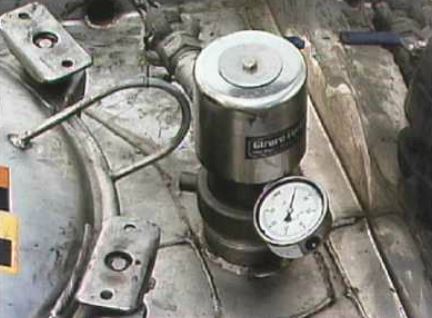
A motor valve, operated by a control device that opens and closes to maintain set pressure on the meter tube.
Movement of the compressor piston toward the drive unit.
A cleaning process that uses air to remove accumulated cake from the bags of a baghouse.
A valve used to maintain design gas pressure, such as in a separator or a LACT unit, by maintaining a constant pressure and controlling the flow rate.
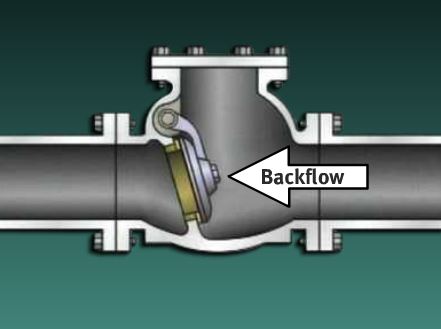
The reversal of fluid flow through a valve.
The printed circuit board at the rear of a PLC chassis or rack that contains communications and power buses for the PLC system modules, with sockets into which the modules are plugged.
A type of centrifugal fan in which the blades are curved backward to promote smooth air flow.
A type of centrifugal fan in which the blades are sloped back from the direction of rotation.
Reversing the flow of liquid through a filter to clean off the filter medium.
Devices inside a vessel, such as a reactor or separator, used to reduce the rate of flow, change the direction of fluids, and increase mixing efficiency.
A filtering device containing rows of long cloth bags that are used to trap particulates from a gas or vapor stream.
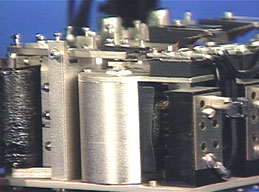
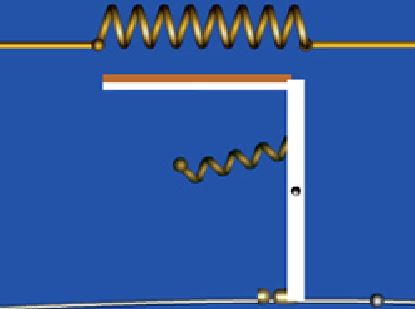
A relay element, similar to a clapper element, that consists of a beam with a pivot, a moving contact, and a fixed contact.
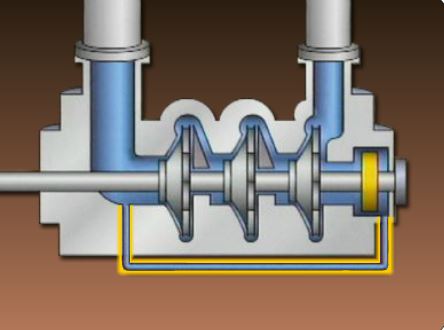
A device that is mounted onto a pump shaft at the discharge end to reduce the impact of axial thrust.
A compressor with compression units on both sides of the same frame.
A furnace that uses two fans: one to provide air for the burners and the other to remove the combustion gases.
A line that runs from a balancing piston chamber to the suction line of a centrifugal pump.
Resistors places on the non-inverting terminal of a differential amplifier, used to balance the resistance of the non-inverting terminal with the resistance of the inverting terminal.
A type of lift check valve that has a ball shaped disc.
A valve with a ball-shaped disc that has a hole through it. The ball is rotated a quarter turn to open or close the valve, providing a straight-through flow pattern. Typically used as a control device in low-pressure applications and not designed for throttling.
A range of frequencies within a given band, in particular that used for transmitting signals.
A band-pass filter is a device that passes frequencies within a certain range and rejects frequencies outside that range.
The capacity at which a network can transmit data. Also, a measure of how well an oscilloscope responds to high-frequency signals, reported at the -3dB point where the displayed signal reduces to 70.7% of the applied signal. In amplifiers, it refers to the complete range of frequencies over which an op amp can amplify and provide its rated output.
The range of frequencies within which the gain is 0.1 dB of the nominal value.
A graph that uses horizontal or vertical bars to represent numerical quantities, or a display on digital test instruments that provides an analog representation of the measured signal.
A barchan dune is an arc-shaped sand ridge, comprising well sorted sand. A barchan dune possesses two "horns" that face downwind, with the downwind sloping slip face at the angle of repose of sand, approximately 32 degrees.
A barefoot well completion is a well completion that has no casing or liner set across the reservoir formation, allowing the produced fluids to flow directly into the wellbore.
A large, rectangular, flat-bottomed vessel that may be used to transport liquid products.
A mineral consisting of barium sulfate, generally white or colorless, and the main source of barium.
A measure of petroleum volume in the United States, equal to 42 U.S. gallons. Also, a cylindrical chamber in a pump into which well fluid flows and is displaced by a closely fitted plunger. In electrical work, the part of a terminal or connector where wiring is inserted during installation.
Part of the outer casing of a radially split pump that can be removed to gain access to the volute casing.
A measure used to aggregate oil and gas resources or production, with one BOE being approximately equal to 6,000 cubic feet of natural gas.
A frame-like device that can be used to support a radially split pump's volute casing during removal and installation.
In electronics, the center element of a bi-polar transistor. In chemistry, a substance that releases hydroxyl ions when added to water.
The effective permeability to the non-wetting phase (usually hydrocarbon) at irreducible wetting phase saturation.
A number system that uses the digits 0 through 9.
Able to describe the task, process or element / Can perform simple or routine activities without supervision / Has basic understanding of procedures / Participates in routine implementation of field applications / Elevates complex situations to appropriate person.
Impurities such as sand, clay, etc., now called sediment in A.P.I. publications.
A large, natural depression on the Earth's surface in which sediments, generally brought by water, accumulate.
Basin starvation refers to a period when land-derived sediment is not deposited. This process results in distinct sedimentary cycles, where land sediment fills the basin during low sea levels and shifts to shelf or marine deposition during high sea levels.
Blending in which components are taken directly from process units or from individual rundown tanks and blended in a blend tank.
Bathymetry maps depict the submerged topography and physiographic features of ocean and sea bottoms. Their primary purpose is to provide detailed depth contours of ocean topography as well the size, shape and distribution of underwater features.
One stock tank barrel, of 42 U.S. gallons liquid volume, used in reference to crude oil, bitumen, condensate or natural gas liquids.
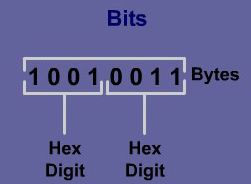
Binary Coded Decimal number expressed in a coded binary format. The number 123 expressed in BCD is 0001 0010 0011.
One billion cubic feet of natural gas.
Beamforming or spatial filtering is a signal processing technique used in sensor arrays for directional signal transmission or reception.
A device that holds the bearing at one end of the worm shaft inside a motor operator.
The housing that encloses a pump's shaft bearings.
The term bedding layer, which is also termed stratification, ordinarily describes the layering that occurs in sedimentary rocks. Bedding layers are greater than one centimeter in thickness, whereas laminations are less than one centimeter thick.
The surface that separates one stratum, layer, or bed of stratified rock from another.
A bedding plane is the surface that separates one stratum, layer or bed of stratified rock from another.
Competencies that identify individual characteristics expected of individuals to function competently in the specific position, including interpersonal and people-oriented skills, team skills, leadership skills and essential internal attributes.
A thin-walled, corrugated, accordion-shaped metal tube that expands and contracts in response to changes in pressure.
A power grinder with a wheel on each end of a motor-daven shaft. Usually mounted on a work bench or a stable, freestanding pedestal.
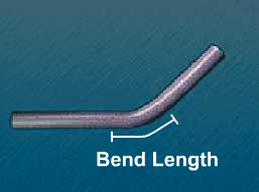
The amount of conduit that is used to complete a bend.
The measure of how fiat or how sharp the curve of a bend is.
A process or activity that has been shown in practice to be the most effective.
The ratio of the change in base current to the change in collector current of a transistor; current gain in the common emitter circuit configuration.
A type of gear that is used to transmit power from one shaft to another shaft that is usually set at a 90-degree angle.
A strip of two different metals bonded together. When the strip is heated, the metals expand at different rates, causing the strip to bend.
A transistor in which the poles are made of the same type (N or P) material; N-P-N or P-N-P transistors.
A physical prover in which the fixed volume is determined by the displacer making a round trip.
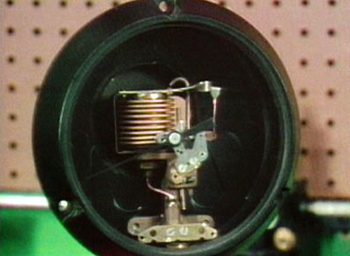
A temperature measurement device containing two different metals that expand and contract at different rates.
A large rectangular, cylindrical, or spherical vessel, with a relatively broad cross-section and either an open top or a closed top.
A discrete device having two states. Also, the base two numbering system.
The numbering system based on powers of two.
A distillation tower that separates a feed into two products.
A measure of how much oxygen is needed for the micro-organisms in activated sludge to decompose organic matter in wastewater.
Chemicals that are added to water to kill micro-organisms.
Refers to something that is produced or brought about by living organisms, encompassing any constituents, secretions, and metabolites of plants or animals.
A plastic bag, usually red and imprinted with the international biohazard symbol, designed for materials contaminated with blood or other infectious materials.
Biostratigraphic zones are intervals of geologic layers that are defined on the basis of their fossil assemblage.
Biostratigraphy is the application of plant and animal fossils to date and correlate geological strata.
Biota refers to the animal and plant life of a particular region, habitat or geological period.
Biotic refers to the living or once-living components of an environment, including all organisms, from microscopic bacteria to macroscopic plants and animals, as well as their waste and remains. It encompasses anything that is, or was, alive within a specific ecosystem or geological setting.
The reworking of soils and sediments by animals, and sometimes by plants. Bioturbation structures are patterns such as tracks, trails, burrows, and mounds created in sediments by the activity of living organisms, also known as trace fossils when found in ancient rocks.
Bioturbation structures are patterns created in sediments by the activity of living organisms, such as tracks, trails, burrows, and mounds. These structures are also known as trace fossils when found in ancient rocks.
A birdcage is an outer armour distortion of a wireline logging cable.
A multivibrator that has two stable states.
A single binary digit of information that has a value of either I or 0 and is used to represent an on/off or active/inactive state.
An address that refers to a single bit of a memory word.
Bit balling is a phenomenon that occurs in drilling operations when drilling in soft, sticky formations. The drilled material (cuttings) accumulates in the bit, forming a ball or clump that reduces and potentially stops the bits ability to cut formation rock and progress the borehole.
A highly viscous form of crude oil (greater than 10,000 centipoise) resembling cold molasses (at room temperature). Bitumen must be heated or combined with lighter hydrocarbons for it to be produced. Contains sulfur, metals and other nonhydrocarbons in its natural form.
A rotating or fixed part of a turbine. Rotating blades convert steam energy into mechanical energy, which rotates the turbine shaft; fixed blades direct steam into the rotating blades.
See Blind.
A tank that has been modified to maintain a layer, or blanket, of inert gas above the liquid in the tank.
The absolute closure of a pipe, line, or duct by the fastening of a solid plate (such as a spectacle blind or a skillet blind) that completely covers the bore and that is capable of withstanding the maximum pressure of the pipe, line, or duct with no leakage beyond the plate.
Bleb refers to a small, bubble-like inclusion of one mineral that is trapped within a larger mineral; essentially a tiny pocket of a different mineral material embedded within another mineral's matrix.
A flow control circuit that controls the amount of fluid going to an actuator by metering fluid that is bled off to the reservoir.
A valve that is commonly used to release, or bleed, pressure from a tank.
Valves installed on product lines and used for sampling and for bleeding air out of the lines.
Components that are mixed, or blended, together in order to produce a product.
A computer that processes data from control variables and adjusts the blend as necessary during an in-line blending process.
Part of an in-line blending system in which a static mixer mixes the blend components together.
Instructions that give the exact blend components and proportions to be used to blend a specific product.
A tank used for mixing and storing intermediate products or finished products, including the tank in a batch blending system where blend components are mixed together.
The practice of using several media in one curriculum. It combines traditional face-to-face learning and e-Learning to create a more holistic, effective training system. It leverages the best in-person learning experiences with online learning to provide a comprehensive, multi-method approach to learning and development.
Mixing two or more components to produce a product.
A factor, resulting from component interaction, that causes a higher road octane than the weighted average road octane of blend components.
A factor, resulting from component interaction, that causes a lower road octane than the weighted average road octane of blend components.
Octane numbers that allow for blending bonuses and blending negatives that result from the interaction of blend components.
A solid metal plate or disk inserted between pipe flanges to completely block off and isolate a line or piece of equipment, prohibiting flow in either direction. Also called a blank.
A full-rated flange fitting used to blind or cap the flanged end of an open pipe or valve.
A list of all blinds (or blanks) installed to isolate equipment. It can also contain other isolation procedures. It documents installation and removal requirements.
A non-threaded fastener that is used to join pieces when only one side of a joint can be reached.
An area to the rear and side of a vehicle that cannot be seen by looking in the rear view mirror or side view mirrors.
A solid steel disc with bolt holes; used to close off the end of a pipe or, on the side of a pipe, for easy access to the inside of the pipe.
A valve which shuts off flow in a meter tube and the seal of the valve can be checked by draining the valve.
A lifting device that uses two blocks and multiple pulleys, called sheaves, to create a mechanical advantage.
A diagram in which blocks are used to represent the major components in a system or the basic steps in a process.
A type of calibration gauge machined to an exact size; available in three grades.
A spade terminal in which the tips of the forked tongue are angled. When the terminal is installed in a terminal block the terminal butts against the barrier of the block.
The process of closing all valves so that flows can neither enter nor leave a tank; also called isolating. Also includes lockout and tagout of valves for the tank and its associated equipment and lines, as well as blinding valves at the lines to and from the tank and disconnecting the tank and its auxiliary equipment from their energy sources.
Human blood, human blood components and products made from human blood. It also includes the liquid that can ooze from wounds.
Plasma, red blood cells, white blood cells and platelets.
Chemicals that decrease hemoglobin function or deprive the body tissues of oxygen.
A hierarchical ordering of cognitive skills established by Benjamin Bloom in 1956. IHRDC uses Bloom's taxonomy as a guide to writing behavior statements with increasing verb complexity across the four competency levels. See also, Proficiency statements.
The intentional removal or release of water, liquid, and solids from a system such as a boiler or cooling tower during operation, in order to control water chemistry and remove accumulated salts, deposits, and other impurities that could cause foaming and fouling.
Asphalts that are produced by forcing hot air into soft grades of asphalts in order to make the asphalt harder.
An oil well blowout is an uncontrolled release of crude oil. Blowouts occur when pressure-release systems fail.
Shielded twisted pair cable commonly used for PLC network connections.
A reproduction of an original drawing of a structure or a component; sometimes referred to as a construction drawing or a working drawing.
Barrels of oil equivalent per day.
The rate of heat input to a distillation column from a reboiler.
The component in a fossil fuel power plant that burns fuel to produce heat and uses that heat to convert water into steam.
The demand for steam from a boiler.
Valves used to isolate the boiler from the turbine, if needed.
The stopping of all fuel flow to the boiler and the stopping of the ignitors.
The temperature and pressure at which a liquid changes to a vapor.
The percent of a product that has vaporized at a particular temperature.
The temperature at which a liquid boils at a given pressure.
A metal rod or pin for fastening objects together. A bolt usually has a head at one end and threads at the other and is secured by a nut.
The host government agreement typically requires payments at key milestones throughout the exploration and production phases. A Signature Bonus payment is made when the initial agreement is executed; Discovery Bonuswhen a discovery is made; Initial Production Bonus when production begins; and perhaps others as higher levels of daily or cumulative production are achieved.
A mathematical system of logic functions named after George Boole, in which variables have only the values "true" (1) and "false" (0), with associated operators such as AND, NAND, NOT, OR, and NOR.
An expression that uses letters and logical operators to represent a logic function.
The angle between the horizontal plane and the centerline of a crane's lower, or base, boom section.
The vertical distance from ground level to the centerline of a cranes main boom point shaft.
Borax is a white compound which occurs as a mineral in some alkaline salt deposits.
A hole in the earth made by a drilling rig.
Borehole breakout is the enlargement of a borehole from a regular circular shape.
Borehole breakout is the phenomenon of the failure in the borehole rock when subjected to drilling activities, caused by in situ stress concentrations in the vicinity of the borehole that exceed the material strength.
Borehole compensation is an upgoing and downgoing arrangement of transducers in a logging tool to offset spurious changes in readings caused by variations in the borehole size or the sonde tilt.
Borehole imaging refers to those logging and data processing methods that are used to produce centimeter-scale images of the borehole wall and the rocks that make it up.
Borehole imaging devices are high resolution logging tools that produce maps of physical measurements of the rocks exposed on the borehole wall. They are thus two-dimensional logs, with depth and azimuth as independent variables. Three main imaging techniques are: ultrasonic reflection; electrical scanning; optical scanning.
Borehole rugosity is the roughness, or unevenness, of a borehole.
The wellbore itself, including the open hole or uncased portion of the well. Borehole may refer to the inside diameter of the wellbore wall—the rock face that bounds the drilled hole.
A hole, pit or excavation that has been dug for the purposes of removing gravel, clay and sand used in a construction project such as when building an overpass or embankment.
The solid, non-combustible material that falls to the bottom of a boiler.
A bottom hole assembly (BHA) is the lower part of the drill string, extending up from the bit to the drill pipe. The assembly can consist of drill collars, stabilizers, reamers, shocks, hole openers, and the bit sub and bit.
The bottomhole assembly (BHA) is the lowest part of the drill string, extending from the bit up to the drill pipe. The assembly can consist of drill collars, subs such as stabilizers, reamers, shocks, hole-openers, and the bit sub and bit.
The bottomhole assembly (BHA) is the lowest part of the drill string, extending from the bit at the bottom of the borehole up to the drill pipe. A BHA can consist of such elements as drill collars, stabilizers, reamers, shocks, hole openers, the bit sub, and drill bit.
The heavier liquid product with a higher boiling temperature that is collected from the bottom of a distillation column.
The drilling mud and cuttings that are calculated to come from the bottom of the hole to the surface after drilling new hole.
Bottomset beds are created from the lightest suspended particles that settle farthest away from an active delta front, as the river flow diminishes into a standing body of water and loses energy.
The Bouma sequence is a model of sedimentary structures that helps identify underwater debris flows or turbidites. It is named after Arnold H. Bouma, who first described turbidites in 1962.
An extremely thin layer of water surrounding rock surfaces or within the clay lattice or near the surface within the electrical double layer. Bound water in the pore space does not flow under normal reservoir conditions.
Boundary conditions are the flux (flow rate) or pressure states assigned to the theoretical boundaries used in developing and solving the differential equations that apply to well testing and in specifying a model to match to pressure transient data.
A curved, thin-walled hollow tube, closed at one end, that responds to changes in pressure by attempting to straighten out or curl up.
The bow and arrow rules states that the best estimate of the direction of movement of a thrust is given by a line drawn at right angles to the chord joining the ends of the fault trace.
A bow tie is a concave-upward reflection in seismic data.
An experimental gas law stating that the pressure of a given mass of an ideal gas is inversely proportional to its volume at a constant temperature.
A process of elimination method in which boundaries are established around parts of a process during troubleshooting in order to loacte a problem.
A "braided stream" refers to a river or stream with multiple, interweaving channels that are separated by small, often temporary islands, which are called braid bars. These create a pattern resembling a braid and typically form in areas with high sediment loads and variable flow conditions where the water divides and recombines frequently.
A device for stopping and firmly holding the walking beam at any point in the stroke.
Measurement of the actual power output of the compressor. BHP considers all the losses and inefficiencies within the compressor system. BHP reflects the effective power that the compressor provides to compress the natural gas. It considers mechanical losses, friction, heat losses, and other inefficiencies that reduce the output power of the compressor.
A parallel path in a PLC ladder program. Inputs in parallel perform the logical OR function. Outputs in parallel are energized simultaneously.
The current flow through one branch of a parallel circuit.
A welding application that heats base metals instead of melting them.
The range of reverse bias voltage on a voltage-current graph beyond the breakdown voltage, where a small change in voltage results in a large increase in current flow across a P-N junction without causing damage to the junction.
The critical value of reverse bias voltage required to overcome the resistance of the depletion region of a reverse-biased P-N junction, after which current flow rapidly increases.
A relay that detects a breaker's failure to operate and then opens other breakers to isolate a fault.
Borehole breakouts are increases in the borehole wall diameter that are parallel to the minimum horizontal stress and appear where stresses around the wellbore exceed the compressive strength of the rock.
A situation in which a contaminated gas stream breaks through the saturated carbon bed of a carbon adsorption system without any further removal of contaminants.
The flow of air, gases, and vapors into and out of storage tanks in response to increases and decreases In ambient temperatures.
Breccia is a clastic sedimentary rock composed of angular, sharp-edged rock fragments (clasts) that are larger than 2 mm in diameter. The clasts are embedded in a fine-grained matrix, which is usually cemented together by minerals like quartz, calcite, or clay.
The part of an overhead-type crane that travels on elevated rails and supports the trolley and hoist mechanism.
A piece of metal that is used to bridge the gap between a loading dock and a truck, van, or railroad car. Also called a dock board.
A device or circuit that conducts during both halves of an AC cycle and produces twice the voltage of a full-wave rectifier.
A flexible steel cable looped over the horsehead and fastened to the carrier bar.
A bright spot is a seismic amplitude anomaly, or a high amplitude, that can indicate the presence of hydrocarbons. Bright spots result from large changes in acoustic impedance and tuning effect, such as when a gas sand underlies a shale, but they can also be caused by phenomena other than the presence of hydrocarbons, such as a change in lithology. This term is often used synonymously with hydrocarbon indicator.
Water strongly impregnated with or containing large amounts of salt, especially sodium chloride.
A measurement of the amount of heat required to raise the temperature of one pound of water one degree Fahrenheit at atmospheric pressure.
The heat required to raise the temperature of a one-pound mass of water by one degree Fahrenheit.
Brittleness is characterized by rocks that slide, fracture or rotate during movement.
The erratic random movement of microscopic particles in a fluid, as a result of continuous bombardment from molecules of the surrounding medium.
A PC program that searches a network for a node with which it can communicate. RSLinx is Allen-Bradley's network browser.
The part of a DC motor that holds the brush and brush tensioning assembly and provides the connection point between the brush and the field coil(s).
The connecting link between a OC motor brush and a brush holder.
The part of a DC motor that supports the brush holders.
The part of a DC motor that holds the brush against the commutator.
The parts of a DC motor that make sliding electrical connections between the commutator and the power source.
An exciter that does not have brushes or slip rings, using a rectifier instead to convert AC into DC for purposes of AC generator excitation.
Basic Sediment and Water.
A device on the LACT unit which monitors the signal from the BS&W probe to determine BS&W content.
An inline device which senses the BS&W content of the oil.
British Thermal Unit; the amount of heat needed to raise the temperature of one pound of water by one degree Fahrenheit.
Slotted metal caps bolted over elevated nozzles or openings in contactor trays, which cause gas to break up into small bubbles for intimate contact with the glycol.
The pressure and temperature conditions at which the first bubble of gas comes out of solution in oil.
The bubble point pressure is the pressure at which gas bubbles first come out of the solution.
An indirect level measurement system that measures the level in a tank based on the air pressure needed to force all of the liquid from a vertically mounted pipe.
A system of organizing employees into work groups in such a manner that each member of the group is designated to be observed by at least one other member of the group. The purpose of the buddy system is to provide rapid assistance to employees in an emergency.
In fiber optics, a plastic outer jacket coating around each fiber used to help protect the fiber from damage. In electronics, a voltage follower used to isolate one circuit from another.
A solution that tends to remain at a constant pH; used to calibrate certain types of analyzers, such as pH analyzers.
Bulk density is a property of solids, defined as the mass of many particles of the material divided by the total volume they occupy.
Vehicle or freight containers used to ship hazardous materials with no intermediate form of containment, such as rail tank cars and tank trucks.
A horizontal, cylindrical tank with rounded ends, supported on saddles that raise it off the ground. A type of high-pressure above ground storage tank.
A controller feature that enables the controller to be changed from automatic mode to manual mode, and vice versa, without causing a change in the control signal to the process.
The upward force exerted by a liquid on an object placed in it, equal to the weight of the displaced fluid.
The characteristic of a liquid that causes it to push up on an object placed in it; characteristic that causes objects to float in liquids.
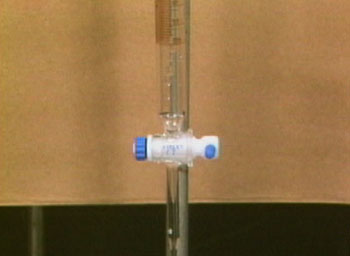
A type of graduated cylinder with a valve at the bottom; frequently used to perform titrations.
Buried faults may end abruptly in the subsurface at an erosional surface.
The amount of air flow to which a catalyst is subjected for combustion.
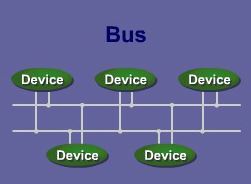
In networking, a topology in which all devices connect in parallel to the same network wires. In electrical systems, a common conductor that connects a power source to several load circuits.
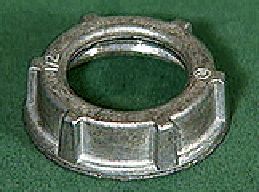
A fitting used to protect conductors from sharp edges at conduit entry/exit points. Also, a device that allows a conductor to penetrate an equipment enclosure while remaining electrically isolated, typically consisting of a conductor projecting through a cylindrical porcelain insulator.
A prefix for the name of a hydrocarbon that has four carbon atoms.
An alkane with the formula C4H10, a colorless, odorless, highly flammable paraffin hydrocarbon that is a gas at room temperature and atmospheric pressure, but is easily liquefied under pressure.
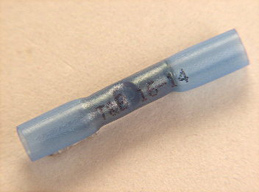
A crimp-on connector that has two identical barrels into which wires can be inserted for connection.
See Single blade damper.
A valve with a round, thin body and a flat disc mounted on a central shaft, rotated a quarter turn to open or close. Typically used as a control device in low-pressure applications.
A type of olefin commonly used in alkylation reactions; consists of four carbon atoms and eight hydrogen atoms.
BVI is immovable, or bound, water in a formation in NMR log interpretation.
A valve which when open allows liquid to by-pass a vessel or device and when closed causes liquid to go into the vessel or device.
Discharge gas is recycled to the suction line in order to increase the volume of gas entering the cylinder.
A valve that enables an operator to reroute flow around a system component.
Eight bits of digital data.