IHRDC Logo

Discover the IHRDC Energy Glossarybeta

Search or select a letter above to browse the glossary.

F

F-K filters

Seismic data is typically in time and space domain. F-K filters convert the data to frequency and wave number domain.

FEED

Front-end engineering and design – part of a project's life cycle.

FFI

FFI (free fluid index) was the term used for the effective porosity in historical NMR log interpretation terminology.

FK filter

An FK filter is a seismic processing filter that minimizes surface waves and coherent energy but strengthens the reflected waves.

FOA

A designation for a forced-oil/forced-air-cooled power transformer; abbreviation for "forced oil to air."

FTIR Spectroscopy

Fourier Transform Infrared spectroscopy. A form of infrared spectroscopy that uses complex mathematical equations to help smooth out peaks and provide rapid, accurate results.

Face shield

A piece of protective equipment that protects the entire face from flying particles and liquids

Facies

A rock unit with distinctive characteristics, formed under certain conditions of sedimentation reflecting a particular depositional environment or process.

Facility

(A) Any building, structure, installation, equipment, pipe or pipeline (including any pipe into a sewer or publicly owned treatment works), well, pit, pond, lagoon, ditch, storage container, motor vehicle, rolling stock, or aircraft, or

(B) Any site or area where a hazardous substance has been deposited, stored, disposed of, or placed, or otherwise come to be located; but does not include any consumer product in consumer use or any water-borne vessel.

Factor

A number that is multiplied by another number

Factoring

An operation used to separate a common factor from terms in an expression

Factory Bends

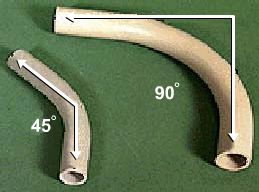
Short lengths of conduit that come bent in 90-degree and 45-degree angles

Fahrenheit

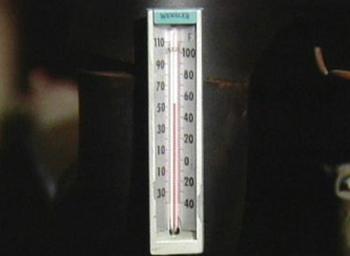
A temperature scale with the freezing point of water at 32°F and the boiling point of water at 212°F.

Fall time

The time required for an output voltage step to change from 90% to 10% of its final value.

False Pressure

False pressure is the extrapolation of the pressure in a build-up test to a Horner time ratio of 1 for a well which has had some pressure depletion in its drainage area caused by the extended production of fluids. It is an intermediate step in estimating the average pressure in the drainage area of a development well.

Fan

A motor driven device used to increase the pressure of air so that it will flow through a ventilation system.

Fan system

A system composed of a fan, any ducts connected to the fan, and other components that are associated with the fan.

Fan wheel

The rotating part of a fan.

Fanglomerate

Fanglomerate is a sedimentary rock that forms when sediments are deposited on alluvial fans and then cemented together over time. This is a type of conglomerate made up of particles ranging from gravel to silt and is characterized by a chaotic texture.

Far Water

Far water is the water which is not bound to the clays in the dual water model.

Farm-in

The acquisition of part or all of an oil, natural gas or mineral interest from a third party.

Farm-out

The assignment of part or all of an oil, natural gas or mineral interest to a third party.

Farmin / Farmout

An agreement under which the owner of a working interest in an oil and gas lease assigns a share of that interest to a third party in exchange for the third party's commitment to cover a portion of the capital expenditures. Generally, the assignee is required to perform seismic surveys or drill one or more wells in order to earn interest in the acreage. The assignee is said "to farmin" while the assignor is said "to farmout".

Fastener

A device used to attach one material to another (e.g., a screw, nut, or bolt)

Fault

A planar fracture or discontinuity in a volume of rock, across which there has been significant displacement along the fractures as a result of earth movement.

Fault Drag

Fault drag refers to the deflection of curved markers adjacent to a fault.

Fault Heave

The heave of a fault is the horizontal component of the dip separation.

Fault Rollover and Rollover Anticlines

Fault rollovers and rollover anticlines form when the hanging wall slumps into the low pressure extensional zone associated with listric normal faulting.

Fault Throw

The throw of a fault is the vertical component of the dip separation.

Fault current

The current that exists when an unintended path is established between two or more conductors or between one or more conductors and ground.

Feed (or feed material)

The initial material introduced to the reforming process (usually naphtha for high performance fuels).

Feed preparation section

The section of an alkylation unit in which the feed is decontaminated.

Feed tank

A tank that contains a feed stock used as a basic ingredient for products in one more process units; also called a charge tank.

Feedback

A signal from a motor or monitoring device indicating the actual speed or operating condition. In amplifiers, the output signal fed back to the input, which is negative feedback if the output polarity is opposite to the input polarity.

Feedback Circuit

A circuit that provides a path for part of an amplifier's output to be returned to the input of the amplifier circuit.

Feedback Control

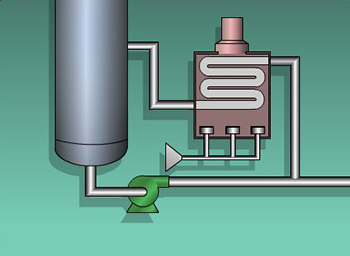
A basic form of closed loop process control in which the control action occurs after the process variable has deviated from set point, where the variable the system manipulates affects the controlled variable it monitors.

Feedforward Control

A type of control in which the system monitors conditions that would produce a process upset and compensates for them in advance to maintain stable controlled variables

Feedwater

The water that is pumped into a boiler to replace the water that leaves as steam.

Feedwater Regulating Valves

Valves that control the flow of feedwater into the boiler to support normal boiler operation; also referred to as flow control valves

Feeler gauge

A precision measurement tool composed of a number of blades, each machined to an exact thickness and used alone or in combination to measure gaps and narrow spaces between surfaces. Also called a thickness gauge.

Feldspar, Feldspathic

Feldspars (KAlSi3O8 – NaAlSi3O8 – CaAl2Si2O8) are a group of rock forming tectosilicate minerals.

Fiber Optic (adjective)

Fiber optic (as an adjective) is consisting of, or using, thin flexible, fibers with a glass core through which light signals can be sent with very little loss of strength.

Fiber Optic Channel

A transfer trip communication channel in which a trip signal is converted to an optical signal and then reconverted to a trip signal by interface panels

Fiber Rope

A type of rope that is made of natural or synthetic fibers that are twisted together into threads, which are then twisted together to form strands

Field

An area consisting of a single reservoir or multiple geologically related reservoirs grouped on the same geological structural feature and/or stratigraphic condition. In electrical systems, the part of an AC generator that has DC power applied to create a magnetic field.

Field Communicator

A hand-held device that communicates with 'smart' analog instruments over 4-to-20 milliamp loop wiring. Data can be downloaded into the communicator memory or entered on its keypad, and then downloaded to another field device.

Field Device

A physical input or output device connected to a PLC system, controller, or variable speed drive that provides information or receives signals required to regulate operation.

Field Print

A field print is an initial analog well log printout, or playback, of well log data versus depth in the well made at the wellsite.

Field Wiring

Wiring performed in the field to connect field devices to a PLC system

Field control rheostat

A variable resistor that is used in some systems of AC generator voltage control.

Field effect transistor (FET)

A special class of transistor in which current flow is controlled by the effect of the voltage potential applied to the gate with respect to the source.

Field shoe

A slider placed between the rotor and a steel plate during the disassembly of an AC generator; the rotor slides on it as the rotor is pulled out of the stator.

Fieldbus

A decentralized network that connects input and output smart field devices, controllers, and operator interfaces, in which control decisions can be placed in the field devices for more immediate and accurate control of industrial processes. Also called an I/O bus.

Fill line

A pipe that is used to admit material into a tank.

Filler Rod

Additional metal used to fill in the seam between two base metals in welding applications. Also called consumable rod.

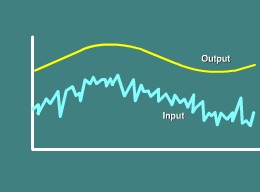
Filter

In electronics, a circuit that conditions an input signal to remove unwanted frequencies or enhance a specific frequency range. In processing, a separation device that uses a filter medium to remove solids from a liquid. In HVAC, an air cleaning device to prevent contaminants from entering conditioned areas.

Filter Cake

The solid residue deposited on a permeable formation (e.g., a borehole wall) when a slurry such as drilling mud is forced against it under pressure. The liquid that passes through the formation leaving the cake behind is called filtrate.

Filter Cake, Mud Cake

The residue deposited on the borehole wall when a drilling fluid is forced against it under pressure. Also termed mud cake.

Filter Circuit

A circuit that smooths out a pulsating DC voltage. Also, a device in protective relaying that allows only a small amount of fault current to flow through a differential relay voltage coil.

Filtering

Hectically reducing a circuit's response to high frequencies or sudden changes

Filters

Devices used to separate solid impurities from process fluids.

Fin-fan Condenser

A condenser that uses air to cool vapours

Final Assessment Results (FAR)

The Assessment scores after completion of the full assessment process.

Final Boiling Point (FBP)

The temperature at which all of a fraction is vaporized; also called the end point.

Final Control Element

The output field device that directly affects the manipulated variable

Final Feedwater Outlet Temperature

The temperature of the feedwater coming out of the highest pressure feedwater heater on its way to the economizer

Final Inspection and Test

The third step in a production process, which ensures that the final product meets the customer's requirements.

Final Operating Temperature

The sum of the internal heat produced when current flows through a conductor plus the amount of heat in the conductor before current starts to flow through it

Fine Print Notes (FPN)

Explanatory material included in the NEC in smaller than normal type (fine print)

Fines

Very small particles ranging in size from 44 to 74 microns, including small broken particles of catalyst.

Finished products

Products that leave a refinery.

Fire Watch

Personnel assigned to watch for a fire during an oxy-fuel gas welding job and be prepared to extinguish it

Fire brigade

A group of workers in a facility with the responsibility for fighting fires.

Fire diamond

A labelling system that uses color-coded sections to rate the flammability, reactivity, and health risks of a hazardous chemical and indicates special hazards. Officially called a National Fire Protection Association (NFPA) 704 label.

Fire extinguisher

A portable device used to put out fires.

Fire monitor

A permanently mounted piece of fire fighting equipment that has a nozzle, but not a hose.

Fire tube

A tube in a fire tube boiler through which combustion gases are routed

Fire tube boiler

A type of boiler in which tubes are used to route hot gases created by combustion through a water-filled shell

Fired Reboiler

A type of furnace that acts as a reboiler, using burning fuel as the heating medium

Fireman

A control valve that regulates fuel flow to furnace burners.

Firing Level

The level of water that must be contained in a steam drum before startup of a boiler

Firing Rate

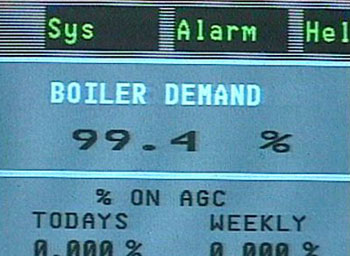
The amount of fuel burned and the amount of steam generated by a boiler. Also called boiler demand.

First Tranche

Similar to a royalty, this is the initial payment made under a Production Sharing Contract (PSC). Unlike a royalty, it is typically distributed between the Government and the Operator according to their respective shares of Profit Oil.

Fish

Any unwanted object left in a wellbore—such as junk metal, hand tools, drill pipe, drill collars, or an MWD package—which normally must be removed or bypassed before well operations can continue.

Fish Tape

A very stiff steel. wire that has a hook on the end and can be pushed through conduit without bending or collapsing

Fish, Fishing

A fish is any object in a borehole which normally needs to be removed by fishing before well operations can continue. It can be junk, part of the drill string, a tool or any other equipment preventing ongoing well activities.

Fishing

The application of tools, equipment, and techniques for the removal of junk, debris, or fish from a wellbore. Key elements include understanding the dimensions and nature of the fish, wellbore conditions, tools and techniques employed, and the process for handling the recovered fish at surface.

Fixed bed sweetening system

A type of mercaptan conversion system in which the catalyst is deposited on a bed material.

Fixed refrigerant cycle heat pump

A refrigeration system in which air temperature is controlled by the direction of air flow.

Fixed-bed carbon adsorber

A device that collects gas stream contaminants on a bed of activated carbon.

Fixture Joint

A type of splice that is used for splicing a wire to a branch circuit, such as what might be done for a lighting fixture

Flame Ionization Detector

A flame ionization detector (FID) is a scientific instrument that measures analytes in a gas stream.

Flame arrester

A device that helps prevent fires and explosions inside a storage tank by interrupting or preventing the passage of a flame.

Flame screen

A safety feature used to prevent fires on a barge.

Flameout

The unexpected loss of a burner flame during furnace operation, creating potentially explosive conditions.

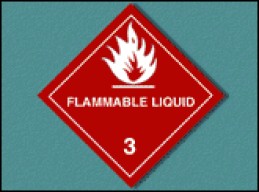
Flammability hazard

A material that poses a risk of detonating and/or burning.

Flammable

A chemical that falls into one of the following categories: •"Aerosol, flammable" means an aerosol that, when tested by the method described in 16 CFR 1500.45, yields a flame projection exceeding 18 inches at full valve opening, or a flashback (a flame extending back to the valve) at any degree of valve opening; •"Gas, flammable" means: •A gas that, at ambient temperature and pressure, forms a flammable mixture with air at a concentration of 13 percent by volume or less; or •A gas that, at ambient temperature and pressure, forms a range of flammable mixtures with air wider than 12 percent by volume, regardless of the lower limit. •"Liquid, flammable" means any liquid having a flashpoint below 100 deg. F (37.8 deg. C), except any mixture having components with flashpoints of 100 deg. C or higher, the total of which make up 99 percent or more of the total volume of the mixture. •"Solid, flammable" means a solid, other than a blasting agent or explosive as defined in 1910.109(a), that is liable to cause fire through friction, absorption of moisture, spontaneous chemical change, or retained heat from manufacturing or processing, or which can be ignited readily and when ignited burns so vigorously and persistently as to create a serious hazard. A chemical shall be considered to be a flammable solid if, when tested by the method described in 16 CFR 1500.44, it ignites and burns with a self-sustained flame at a rate greater than one-tenth of an inch per second along its major axis.

Flammable material

A material that can be ignited easily and will burn quickly.

Flammables

Chemicals that are capable of being easily ignited and of burning rapidly. The exact conditions for this classification differ for solids, liquids and gases

Flange

A rib or rim used to attach objects such as the two halves of a pump casing

Flaring

The burning of natural gas for safety reasons or when there is no way to transport the gas to market or use the gas for other beneficial purposes (such as EOR or reservoir pressure maintenance). The practice of flaring is being steadily reduced as pipelines are completed and in response to environmental concerns.

Flaser Bedding

Flaser bedding is a sedimentary structure characterized by alternating rippled sand and discontinuous mud layers created by the deposition of mud on previously existing sand ripples.

Flash

When vapors rise suddenly from a liquid, typically the result of lowering pressure on a liquid with or without heat.

Flash Drum

A piece of equipment used to separate the light ends from crude before the crude enters an atmospheric tower.

Flash Zone

The section of a distillation tower near the feed point where part of the feed vaporizes (flashes) as it enters the tower.

Flash point

The lowest temperature at which a liquid gives off enough vapors to form a flammable or ignitable mixture with air when exposed to a source of ignition.

Flashback Arrestor

A regulator safety device that stops fire

Flashover

The current effect created when the voltage differential across a bearing exceeds the resistance. Also, a short circuit between the brushes of a motor that occurs when air is hot enough to act as a conductor.

Flashpoint

The minimum temperature at which a liquid gives off a vapor in sufficient concentration to ignite when tested as follows: (i) Tagliabue Closed Tester (See American National Standard Method of Test for Flash Point by Tag Closed Tester, Z11.24 - 1979 (ASTM D 56-79)) - for liquids with a viscosity of less than 45 Saybolt Universal Seconds (SUS) at 100 deg. F (37.8 deg. C), that do not contain suspended solids and do not have a tendency to form a surface film under test; or (ii) Pensky-Martens Closed Tester (See American National Standard Method of Test for Flashpoint by Pensky-Martens Closed Tester,Z11.7 - 1979 (ASTM D 93-79)) - for liquids with a viscosity equal to or greater than 45 SUS at 100 deg. F (37.8 deg. C ), or that contain suspended solids, or that have a tendency to form a surface film under test; or (iii) Setaflash Closed Tester (see American National Standard Method of test for Flash Point by Setaflash Closed Tester (ASTM D 3278-78)). Organic peroxides, which undergo autoaccelerating thermal decomposition, are excluded from any of the flashpoint determination methods specified above.

Flexible Member Pump

A rotary pump that uses components such as flexible vanes or a flexible tube to move fluid

Flinger

A collar that is attached to a pump shaft between the gland follower and the bearing housing to prevent fluid from entering the bearing housing

Flip-Flops

Is an electronic circuit or a bistable multivibrator that has two stable states and thereby is capable of serving as one bit of memory. Usually a flip-flop includes zero, one, or two input signals; a clock signal and an output signal that often includes the complement as well as the normal output.

Float

An object that rides near the surface of a liquid and changes vertical position with any change in level.

Float Switch

A pilot device operated by the level of a liquid

Floating Piston

A piston in the sample cylinder which maintains sample integrity by separating the sample from the displacement fluid.

Floating production, storage and offloading (FPSO)

Provides alternative to pipeline to store oil production and load vessels for movement to markets.

Floating roof tank

An atmospheric tank with an internal or external roof that floats on the surface of the stored liquid, moving upward as liquid enters and downward as liquid is withdrawn.

Floc

Fluffy clumps formed during flocculation as the sticky masses from coagulation come in contact with suspended solids in water.

Flocculant

A chemical that creates ions in water that cause suspended particles to clump together. Lime and ferric chloride are two types of flocculants.

Flocculation

The second step of clarification, in which the sticky masses formed during coagulation are gently stirred to form fluffy clumps called floc.

Flooding

An abnormal condition in a distillation tower caused by the buildup of liquid on trays due to too much liquid flow down the column or too much vapor flow up the column, preventing proper liquid flow.

Floor-fired Furnace

A furnace that has burners installed in the floor of the shell

Floppy Disk

A 3 1/2" disk widely used for storage or transfer of computer information; still called floppy, although the thin, flexible sheet of acetate on which data is stored is now encased in hard plastic

Flow Diagram

A symbolic representation of pieces of equipment, piping, and direction of flow, in a fluid (piping) system; also referred to as a process flow diagram.

Flow Energy

Energy related to the pressures associated with fluid flow

Flow Rate

The amount of fluid passing a particular point in a certain unit of time, often expressed in gallons per minute, cubic feet per day, barrels per day, etc.

Flow Switch

A pilot device operated by changes in the flow of a liquid or gas

Flow Test

A flow test is an operation on a well designed to demonstrate the existence of moveable petroleum in a reservoir by establishing flow to the surface.

Flow Unit

A flow unit is a mappable portion of the total reservoir within which geological and petrophysical properties that affect the flow of fluids are consistent and predictably different from the properties of other reservoir rock volumes.

Flow reversal

A condition in which the areas of higher and lower pressure in a cat cracking unit are reversed.

Flowmeter

A flowmeter is a device for measuring in-situ the velocity of fluid flow in a well completed for production or injection. The most common device is the spinner flowmeter.

Fluid

A substance that flows and yields to any force tending to change its shape. Both liquids and gases are fluids.

Fluid Contact

Fluid contact is the interface that separates fluids of different densities in a reservoir. Horizontal contacts are usually assumed, although tilted contacts occur in some reservoirs.

Fluid Density

Fluid density is the density of the fluids enclosed in the pore spaces.

Fluid Displacement

A method of sampling in which the sampled product replaces a fluid in the sample cylinder.

Fluid Flow

The movement of a liquid or a gas from one point to another

Fluid Invasion

Fluid invasion is a general term to describe the presence of a particular fluid in an undesirable area, such as the movement of drilling mud into a section of the reservoir formation.

Fluid Saturation

The measure of the fluid volume present in the pore volume of a porous medium, such as a hydrocarbon reservoir. The saturation of any particular fluid is the ratio of that fluid volume to the total pore volume of the rock.

Fluid Thermometer

A temperature measurement device that works on the principle that most fluids expand when they are heated and contract when they are cooled

Fluid catalytic cracking unit

See Cat cracker.

Flume Flow Measuring Device

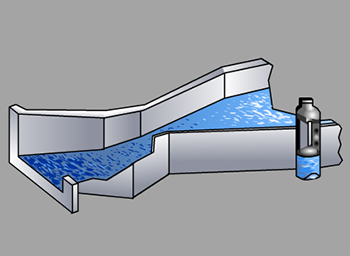
An open channel flow measuring device that uses a downward sloping throat as a restriction. The liquid level behind the restriction is converted to a flow rate

Fluorescence

The emission of light by a substance that has absorbed light or other electromagnetic radiation. Under ultraviolet radiation, all crude oils exhibit fluorescence which varies in intensity and hue.

Flush Valves

Valves that are opened to direct water down the sides of a bottom ash hopper so that ash clinging to the sides of the hopper is rinsed away

Flushed

, or The flushed zone is the volume of rock close to the borehole wall in which all of the moveable fluids have been displaced by mud filtrate.

Flushed Zone

The volume of rock close to the borehole wall in which all of the moveable fluids have been displaced by mud filtrate.

Flushed Zone, Invaded Zone

The flushed zone is the volume of rock close to the borehole wall in which all of the moveable fluids have been displaced by mud filtrate.

Flushed, or Invaded, Zone

The volume of rock close to the borehole wall in which some or all of the moveable fluids have been displaced by mud filtrate. It consists of the flushed zone (where all moveable fluids are displaced) and the transition zone.

Fluvial Deposits

Sediments deposited by rivers, streams, and associated gravity flow processes, formed by uni-directional fluid movements.

Flux

In electrical work, a cleaning agent used to remove oxidation during soldering. In magnetism, a measure of the strength of a magnetic field over a given area.

Flux Gate Compass

The basic fluxgate compass is a simple electromagnetic device that employs two, or more, small coils of wire around a core of highly permeable magnetic material, to directly sense the direction of the horizontal component of the Earth's magnetic field.

Flux Vector Controller

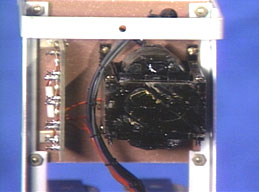
An advanced type of inverter controller that can control both torque and speed by monitoring the internal characteristics of a motor during operation

Flux density

The magnetic field strength in the core, typically measured in Telsa or Gauss.

Fluxgate Compass

An electromagnetic device that employs two or more small coils of wire around a highly permeable magnetic material.

Fluxgate Magnetometer

Fluxgate magnetometers deliver magnetic field measurements by periodically saturating a piece of ferromagnetic core material to modulate the local magnetic field and sensing this modulated magnetic field using a coil of wire.

Fly Ash

A fine, powdery substance that is left over after combustion and exits the boiler with the flue gas

Foam system

A type of fire protection system that uses foam to blanket a fire and extinguish it by removing its source of oxygen.

Foaming

A condition that can occur when contaminants get into feed or other streams entering a distillation column.

Fold

In geology, a structure generated when initially planar layers of rock formation become bent. In seismics, a measure of the redundancy of common midpoints, equal to the number of offset receivers that record a given data point and are added during stacking to produce a single trace.

Follower Magnet

A magnet, located inside a nonmagnetic enclosing tube, that follows the vertical movement of a doughnut-shaped float with a ring magnet inside its center hole. The follower magnet is attached to an indicator to provide continuous level measurement.

Food to Micro-organisms Ratio

The relationship between the amount of organic materials, or food, that is supplied in an activated sludge system and the number of micro-organisms in the system

Force

A push or pull on an object. In ergonomics, the amount of physical effort required to perform a task. In PLC troubleshooting, a software tool that allows making a discrete input or output true or false regardless of field device or program logic demands.

Force Fed Lubrication

A lubrication system in which lubricant is pumped (forced) to inlet ports of the prime mover, compressor frame, and cylinders to maintain a constant supply of lubricant to these areas.

Forced Convection

A type of convection heat transfer in which a mechanical device, such as pump or a fan, produces fluid movement

Forced Draft Fan

A type of fan used to blow or force air into a boiler or system.

Forced Draft Furnace

furnace in which the energy required to move the air and combustion gases through the furnace is produced mechanically, by a fan

Forced-draft Cooling Tower

A mechanical-draft tower in which air is pushed through the tower by fans

Forced-oil/forced-air-cooled power transformer

A power transformer that is cooled. by the forced circulation of both oil and air.

Foreset, Foreset Beds

A foreset bed is one of the main parts of a river delta. It is the inclined part of a delta that is found at the end of the stream channel as the delta sediment is deposited along the arcuate delta front. As the sediments are deposited on a sloping surface the resulting bedding is not horizontal, but dips in the direction of current flow toward deeper water.

Formation

A rock layer which has distinct characteristics (e.g. rock type, geologic age).

Formation Dip Angle

Formation dip is the magnitude of the inclination of a formation bedding plane from the horizontal.

Formation Dip Azimuth

Formation dip azimuth is the angle formed between geographic north and the direction of greatest slope on a bedding plane. Dip azimuth is conventionally measured clockwise from north, so that a plane dipping to east has a dip azimuth of 90°, and one to west 270°.

Formation Factor, Formation Resistivity Factor

The formation resistivity factor is the ratio of the resistivity of the rock saturated with brine (Ro) to the resistivity of the brine (Rw).

Formation Matrix, Rock Matrix

The formation, or rock, matrix or groundmass of a formation rock is the finer-grained mass of material in which larger grains, crystals, or clasts are embedded.

Formation Pressure

The pressure of fluids within the pores of a reservoir (also called pore pressure), usually hydrostatic pressure or the pressure exerted by a column of water from the formation's depth to sea level.

Formation Pressure Gradient

Formation pressure gradient is the change in pressure per unit of vertical depth, typically in units of psi/ft, or kPa/m. Pressure increases predictably with depth in areas of normal pressure.

Formation Pressure, Pore Pressure

Formation pressure, or pore pressure, is the pressure of fluids within the pores of a reservoir, usually hydrostatic pressure, or the pressure exerted by a column of water from the formation's depth to sea level.

Formation Water

The water that occurs naturally in the pore space of rocks.

Formation Water Resistivity, Rw

The resistivity value of the water, uncontaminated by drilling mud, that saturates the porous formation. Formation water is also referred to as connate water or interstitial water.

Formation, Geological Rock Formation

Specific sedimentary strata, or other rock unit, in stratigraphic and petrologic studies.

Formation, Geological Rock Formation, Geological Formation

Specific sedimentary strata, or other rock unit, in stratigraphic and petrologic studies.

Formula

A statement that two specific mathematical expressions are equal; an algebraic equation for a typical problem or situation.

Forward Breakover Voltage

The value of anode-to-cathode voltage required to overcome the reverse-biased junction of an SCR and trigger it from the off state to the on state.

Forward Modeling

Forward modeling is the use of a model in order to simulate an outcome. The problem of getting the model to produce data from the input is called the forward problem. The forward model takes certain parameters and produces data that can then be compared with the actual observations.

Forward Stroke

Movement of the compressor piston away from the drive unit.

Forward bias

The bias potential that allows current flow across a P-N junction: a negative potential applied to the N-type material and a positive potential applied to the P-type material.

Forward curved fan

A type of centrifugal fan in which the blades are inclined forward; also called a squirrel cage fan.

Forward resistance

Resistance across a forward-biased P-N junction.

Fossil

A fossil is the preserved remains or traces of animals, plants, and other organisms.

Fossil fuel

A fuel source (such as oil, condensate, natural gas, natural gas liquids or coal) formed in the earth from plant or animal remains.

Fouling

The buildup of deposits on the internal surfaces pf a heat exchanger

Foundation Fieldbus

The protocol intended to serve as a standard on I/O buses, especially suited to process industries

Four-Cycle Engine

Engines that perform intake, compression, power, and exhaust in four strokes of the piston providing two revolutions of the crankshaft.

Four-way Valve

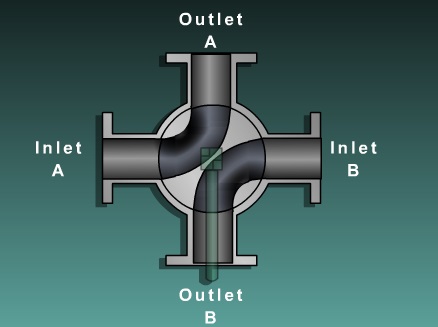
A multiport valve with four ports that directs flow in different combinations for two inlets and two outlets.

Frac, Hydraulic Frac

Hydraulic fracturing, or fracking, is a drilling method used to extract oil or natural gas from the subsurface. In the fracking process, cracks in the subsurface formations are opened and widened by injecting water, chemicals, and sand at high pressure.

Fraccing

Fraccing is the process of creating cracks in underground reservoir rock formations to increase the flow and recovery of hydrocarbons out of a well. This is done by pumping fluid containing proppants under pressure into the reservoir to prop open small cracks and openings that allow more hydrocarbons to be released.

Fracking

Fracking is the process of creating cracks in underground reservoir rock formations to increase the flow and recovery of hydrocarbons out of a well. This is done by pumping fluid containing proppants under pressure into the reservoir to prop open small cracks and openings that allow more hydrocarbons to be released.

Fractionation

The process of separating two or more hydrocarbon components in a stream by distillation, used to obtain valuable products and feedstocks from cracked gas, natural gas liquids, or alkylation products.

Fractionation section

The section of an alkylation unit in which the unreacted fractions are separated from the product.

Fractions

Different groups of hydrocarbons that are separated in a refinery's crude unit or other distillation processes.

Fracture

A crack or surface of breakage within a rock, along which there has been no movement.

Fracture Gradient

Fracture gradient is the pressure required to induce fractures in rock at a given depth.

Fracture Porosity

Fracture porosity is the porosity contained in subsurface fractures.

Fracture, Fractured

A fracture is crack or surface of breakage within a rock, along which there has been no movement.

Frame

The part of an AC generator's stator that supports the stator core.

Frame Size

A method that is used to classify circuit brakes according to given current ranges.

Frame/Moveable Coil

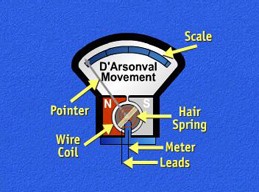
The parts in a moving-coil meter movement that move in response to the interaction between the fixed magnetic field and the field of the current-carrying, movable coil

Free Fall Distance

The distance that a body falls before a personal fall arrest system begins to apply force to stop the fall.

Free Fluid Index

The free fluid index (FFInmr) is the NMR interpretation estimate of the producible porosity.

Free Lift

The greatest distance that the forks can be raised without extending a forklift's mast

Free Liquids

Liquids which can be removed in a two-phase separator.

Free Water

Water that readily separates from other fluids; liquid water. In the dual water model, it refers to formation water that is not bound to clays.

Free Water Level

The highest elevation at which the pressure of the hydrocarbon phase equals that of water, located at the base of the hydrocarbon column and the transition zone. It is equivalent to zero capillary pressure. Above this level, the reservoir may produce water alone, hydrocarbon and water, or hydrocarbon alone; below it lies the aquifer.

Free Water Level (FWL)

The free water level is the highest point in the reservoir where the capillary pressure between water and oil is zero.

Free radical

An active site in a molecule that has a highly reactive unpaired electron.

Freezestat

A sensor used to provide feedback to the control system and initiate measures to reduce or prevent the intake of freezing air into a heating, ventilation, and air conditioning system.

Frequency

The number of cycles completed per second, measured in hertz (cycles per second). Applies to AC power systems, sound waves, and other periodic signals. In electrical formulas, frequency is typically represented by a small f.

Frequency Response

The range of frequencies within which an instrument or amplifier can respond and maintain constant gain. The higher the detectable frequency, the wider the bandwidth and the greater the frequency response.

Fresnel Zone

The Fresnel Zone, named after physicist Augustin-Jean Fresnel, is comprised of seismic waves that are reflected from a large, circular area of a reflecting surface. Arrival times in this zone differ by less than half a period from the first break and will interfere constructively, causing them to be detected as a single arrival.

Friction

The resistance to relative motion that exists between two surfaces or objects in contact with each other.

Friction Lighter

A device that creates sparks by rubbing a piece of flint on a steel surface. Also called a striker or a spark lighter.

Friction Tape

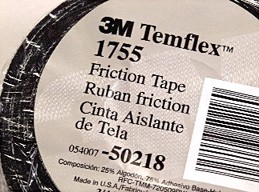
A type of cotton cloth that has been treated with a sticky rubber compound. It is typically applied on top of another insulating material such as rubber tape.

Fuel

A combustible material used to produce heat by burning.

Fuel Gas

Any gas that can be mixed with oxygen to fuel the extremely hot flame used in welding processes

Fugitive Emissions

Emissions of gases, vapors, or volatile organic compounds from pressurized equipment, including pipelines, due to leakage or unintended releases.

Fulcrum

The point or support on which a lever pivots. On a forklift, the front wheel axle can act as a fulcrum if a load is too heavy.

Full Diameter Coring

In order to acquire a full diameter core, drilling must be halted. The drill string is removed from the wellbore, the drill bit removed and a rotary coring bit is attached in its place.

Full Diameter Coring Process

To acquire a full diameter core, drilling must be halted. The drill string is removed from the wellbore, the drill bit is removed, and a rotary coring bit is attached in its place.

Full Flow Pressure

The pressure at which a valve is fully open and passing its maximum volume

Full Sonic Waveform Recording

The full sonic waveform recording consists of the entire waveform, including the compressional, shear and Stoneley waves used for interpretation applications.

Full Waveform Acoustic Logging Tool, Log

A full waveform acoustic logging tool is type of acoustic logging tool that uses a large number of receivers, typically 4 to 12. Such logging tools are designed to measure not only the compressional wave but also the shear and other acoustic waves generated by the transmitter. The separation and identification of these waves are facilitated by the use of an array of receivers placed about 6 in. [15 cm] apart, which is close enough to avoid aliasing but far enough to sample a significant moveout in the wave. The waveforms at each receiver are recorded and processed by signal processing techniques, such as slowness-time coherence, to measure the velocities of the different waves.

Full-Wave Rectifier

A rectification device or circuit that conducts during both halves of an AC cycle, thus producing two DC output pulses during each AC cycle.

Full-Wave Voltage Doubler

A circuit that develops an output pulse during each half of an AC input cycle; the output is equal to twice the input voltage.

Full-face gasket

A type of gasket that covers the entire surface area of a flange and has holes to accommodate bolts/studs.

Fuller's earth

A type of clay used as an adsorbent to remove color and impurities from fats and oils.

Fumes

Solid particles generated by condensation from the gaseous state, generally after vaporization of molten metal.

Function Block

A component element or control device within a control loop that operates on input to produce a different output. In Fieldbus, a program feature that executes process control functions such as analog input/output or PID calculations, which may be placed in the most beneficial location on the fieldbus.

Function Control

A control on a test instrument that is used to determine the electrical property the instrument will measure and the unit of measurement that will be used

Functional Specific Competencies

Competencies that identify the daily activities that the individual is expected to undertake in their normal daily work activities and the knowledge and skills required to perform the job duties in a competent manner (competencies core to a disciple or function, such as, Finance, Operations, Maintenance, HR, Exploration, etc.).

Furnace

A device used to heat raw materials in preparation for further processing.

Fuse

A protective device containing an element that melts and opens a circuit when current flow exceeds a specific value for a given period of time. Unlike circuit breakers, fuses cannot be reset.

Fuse Link

An alloy wire that melts when its current limit is exceeded

Fuzzy Logic

A form of artificial intelligence that enables a controller to continually "learn" from the way an actual process is working and use that information to self-tune for improved performance

Fxy filtering

Fxy filtering is a spatial prediction filtering technique in the temporal frequency domain. The advantage of this filter is that it requires no prior knowledge of the dips of reflectors.

faunal

Faunal refers to the study of animal fossils and their use in determining the age and history of rocks and the Earth.

faunal markers

Faunal markers are fossils or fossil fragments of plants or organisms that can be used to determine stratigraphy.

fence diagrams

Fence diagrams consist of a three-dimensional network of geological cross-sections drawn in two dimensions.

fiber optic

A fiber optic cable uses thin flexible, fibers with glass cores through which signals can be sent with very little loss of strength.

filtrate

The liquid part of a slurry that passes through a rock formation, leaving the filter cake on the formation rock.

first breaks

First breaks are the first signals that are recorded by the receivers.

fissility

Fissility refers to the tendency of a rock to split into thin, parallel layers or laminae along bedding planes--particularly fine-grained sedimentary rocks like shales. This property results from the alignment of clay minerals and other platy minerals within the rock fabric, which is often the result of compaction and diagenesis. Fissility can be influenced by factors such as the depositional environment, sediment composition, and burial history.

fixed allowable

A fixed allowable rate is a production rate designated by a government regulatory agency.

flaps

Flaps are attached to pads to improve borehole contact.

flaser-bedded

Flaser bedding is a sedimentary structure characterized by alternating rippled sandstone and discontinuous mud layers created by the deposition of mud on previously existing sand ripples.

fluid efficiency

The ratio of stored volume within the fracture to the total fluid injected.
foreset beds

A foreset bed is a sloping layer of sediment that is found at the end of a stream channel when a stream carrying sediment meets still water, causing the water's velocity to decrease and the sediment to be deposited. The angle of dip is determined by the depositional environment, including the speed and volume of the current, turbulence, and the amount of clastic material.

foresets

Foreset beds are inclined layers of sediment that form in the subaqueous delta front zone.