IHRDC Logo

Discover the IHRDC Energy Glossarybeta

Search or select a letter above to browse the glossary.

N

N-P-N Transistor

A bi-polar transistor that contains two N-type elements (poles) and one P-type element.

N-type material

A semiconductor material that has an excess of electrons.

NAND Gate

A digital logic gate that produces a LOW output only if both inputs are HIGH. If one or both inputs are LOW, the output is HIGH. It expresses the inverted output of an AND gate.

NEMA

The National Electrical Manufacturers Association

NEMA Code K Controller

A type of DC controller made standard by the National Electrical Manufacturers Association

NEXT

A circuit tester readout that indicates Near End Crosstalk

NGL

Natural gas liquids. Refers to the mixture ofhydrocarbon components that are recovered from a natural gas stream during gas processing.

NOR Gate

A digital logic gate that produces a HIGH output only if both inputs are LOW. If one or both inputs are HIGH, the output is LOW. It is the inverted output of an OR gate.

NOT Gate

A digital logic gate that inverts its input: it produces a HIGH output (1) when the input is LOW (0), and a LOW output when the input is HIGH.

NP Chart

An attribute control chart that is used to plot the number of defective products that are produced by a process

NRU

"Nitrogen Rejection Unit" used to remove nitrogen from the gas stream for injection into oil reservoirs to enhance oil recovery. Applies cryogenic principles.

NYMEX

The New York Mercantile Exchange.

Nameplate

A plate mounted on a piece of equipment that contains detailed information about that piece of equipment.

Nanodarcy

A unit of permeability equal to 10⁻⁹ darcy.

Nanosecond

A unit of time equivalent to 0.000000001 seconds

Naphtha

A gasoline-range product of crude oil distillation that consists of hydrocarbon molecules.

Naphtha fraction

The fraction whose carbon atoms range from C13 to C19, and have boiling points between 220°F and 315°F.

Naphthene

A hydrocarbon with single-bonded carbon atoms in a circular arrangement; a component of naphtha.

National Electrical Manufacturers Association (NEMA)

An organization that acts to maintain and improve the quality and reliability of electrical products

National Fire Protection Assoc. (NFPA) System

A labeling system that uses color coded sections to rate the flammability, reactivity, and health risks of a hazardous chemical with regard to fire prevention. These labels also include warnings about special hazards that are associated with the chemical.

National Fire Protection Association (NFPA)

The organization that publishes the NEC and develops standards to minimize the possibility and effects of fire

National Fire Protection Association (NFPA) system

A hazardous material labeling system that uses color-coded diamond sections to rate the flammability, reactivity, and health risks of a hazardous substance. The labels are meant for use by emergency response personnel and not for the normal handling of the hazardous material.

Nationally Recognized Testing Laboratories (NRTL)

An organization responsible for testing and certifying electrical equipment for safety

Native State Core

A core taken so as to preserve the in-situ water saturation of the rock.

Natural Ciculation

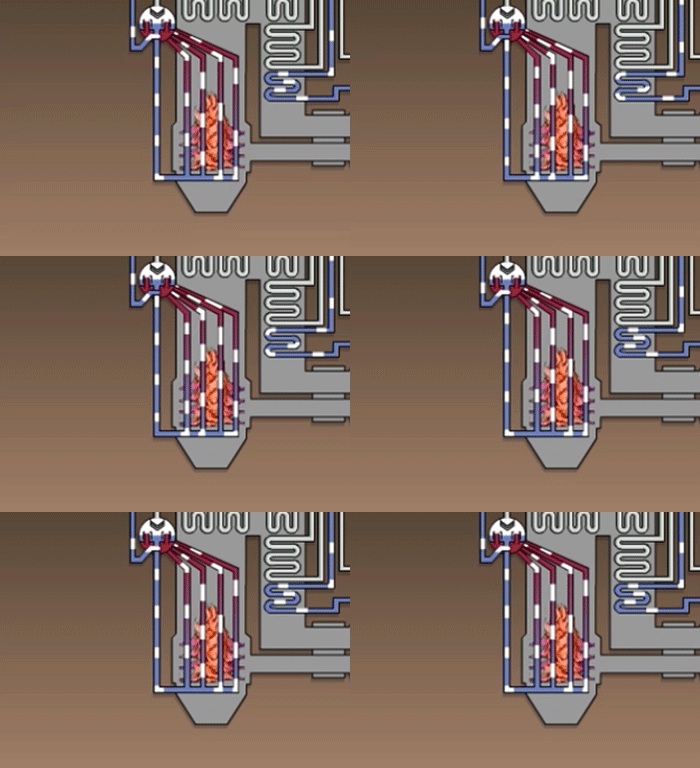
A method of circulating water through a water tube boiler that depends on the differences in density between hot water, cold water, and steam

Natural Circulation

The process by which water and steam move through some drum-type boilers; based on the fact that cold water is heavier than hot water or steam

Natural Convection

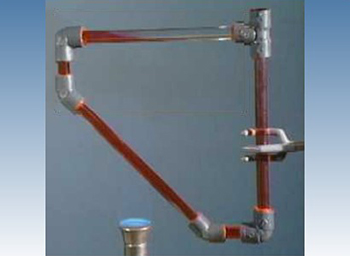
Convection heat transfer that is the result of different densities within a fluid

Natural Draft Furnace

A furnace in which the energy required to move the air and combustion gases through the furnace is produced by a difference in density, without the aid of mechanical devices

Natural Fractures

Naturally occurring, non-sedimentary mechanical discontinuities thought to represent a surface or zone of mechanical failure.

Natural Gamma Ray Log, Gamma Ray Log

A natural gamma ray log is a measurement of the natural emission of gamma rays by a formation.

Natural Gamma Ray Spectroscopy, Gamma Ray Spectroscopy, Spectroscopy

Natural gamma ray spectroscopy is the technique of measuring the spectrum, or number and energy, of gamma rays emitted as natural radioactivity by the formation.

Natural Gas

A highly compressible, highly expandable mixture of hydrocarbons occurring naturally in gaseous form, whose principal component is usually methane. It exists either in the gaseous phase or dissolved in crude oil in natural underground reservoirs. It may also contain nonhydrocarbon gases such as carbon dioxide and hydrogen sulfide.

Natural Gas Liquids

Those components of natural gas which under suitable conditions of temperature and pressure are in the liquid state.

Natural gas liquids (NGLs)

Those components of natural gas which, under suitable conditions of temperature and pressure, are in the liquid state. A general term for highly volatile liquid products separated from natural gas in a gas processing plant, including ethane, propane, butane, and condensate.

Natural-draft Cooling Tower

A cooling tower in which air flows through the tower because of a difference in air density

Navigation Diagram

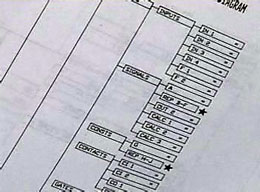
The programming structure of a smart controller, usually detailed in printed form in the controller's user manual. Also called a structure diagram.

Near Water

Near water is the water bound to clays in the dual water model.

Needle Valve

A globe valve with a needle- or cone-shaped disc that fits deep into the seating area, designed for precise throttling control of flow with a two-90° turn flow pattern.

Negative Power

Power that is returning to a power source from a load

Negative Pulse Telemetry

Telemetry systems that create a pressure pulse lower than that of the mud volume by venting a small amount of high-pressure mud from the drill string to the annulus.

Negative feedback

See Feedback.

Negative pressure check

A check for leakage into a respirator when a negative pressure is created inside the respirator by inhaling.

Nephelometer

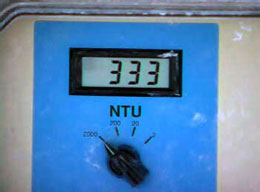
A turbidity meter

Nephelometric Turbidity Unit

A unit of measurement that is typically used to express turbidity. Abbreviated as NTU.

Neritic Zone

The neritic zone is a shallow marine environment extending from mean low water down to 200-metre (660-foot) depths, generally corresponding to the continental shelf.

Net Pay

The reservoir quality thickness above the hydrocarbon contact, normally also including a designated cutoff for high water saturation.

Net Positive Suction Head

The amount of suction head, or pressure, that exceeds the vapor pressure of the fluid that is being moved by a pump

Net Sand

The reservoir quality thickness of a rock unit after the non-reservoir rock is eliminated from an evaluation.

Net acres

The percentage that a company owns in an acreage position with multiple owners. For example, a company that has a 50 percent interest in a lease covering 10,000 acres owns 5,000 net acres.

Net sand thickness

Net sand thickness is the thickness of reservoir quality layers between the oil-water contact and the top of the reservoir.

Net/Gross Pay

Net/Gross pay is the net pay divided by the gross pay. Pay is the component of a reservoir that contains economically producible hydrocarbons.

Net/Gross Sand

Net/Gross sand is the net sand divided by the gross sand.

Network

A system of interconnected devices that allows communication of digital data between them. Individual pieces (nodes) may be devices, parts of a PLC system, or complete PLC systems.

Network Adapter

The interface between a network and any device connected to the network; converts data from the network to a form that the device can read, and converts data from the device to a form that is compatible with the network

Network Analyzer

A device that monitors all connected networks and provides information about network resource utilization and network activity

Network Layer

The network protocol level that governs functions that have to do with how message packets are initiated, addressed, and routed without collisions

Network Protocol

The rules that govern or define how data is transmitted across a network

Network Topology

The physical layout of network

Neutral Flame

An oxy-fuel gas welding torch flame that burns equal parts of oxygen and acetylene. Characterized by a light blue inner cone and a dark blue outer flame envelope.

Neutral position

A position that requires the least amount of muscle activity to maintain. For example, when a person's arm is hanging straight down with the elbow close to the body, the shoulder is said to be in a neutral position.

Neutral transformer

A device used with some wye-connected AC generators that detects and limits current flow to ground if a ground occurs in the generator.

Neutralization

A chemical reaction in which an acid reacts with a base to form water and a salt.

Neutralization Reaction

A chemical reaction between an acid and an alkali that consumes the acid and the alkali and tends to make the solution neutral

Neutron

A subatomic particle with no net electric charge and a mass slightly larger than that of a proton. Together with protons, neutrons constitute the nucleus of an atom.

Neutron Activation

Neutron activation is the process in which neutron radiation induces radioactivity in materials, and occurs when atomic nuclei capture free neutrons, becoming heavier and entering excited states. The excited nucleus often decays immediately by emitting gamma rays, or particles such as beta particles and alpha particles.

Neutron Capture

A type of nuclear reaction in which a target nucleus absorbs a neutron, then emits a discrete quantity of electromagnetic energy (gamma ray photon), merging to form a heavier nucleus.

Neutron Flux

The neutron flux is a scalar quantity used in nuclear physics and nuclear reactor physics. It is the total length travelled by all free neutrons per unit time and volume.

Neutron Generator, Neutron Accelerator

Neutron generators are neutron source devices which contain compact linear particle accelerators and that produce neutrons by fusing isotopes of hydrogen together.

Neutron Lifetime Log

A neutron lifetime log is a pulsed neutron capture log.

Neutron Log, Compensated Neutron Log, Neutron Tool

The compensated neutron log tool makes thermal and epithermal neutron measurements to calculate porosity and identify lithology and the presence of gas.

Neutron Porosity

A measurement based on the slowing down of neutrons between a source and one or more detectors that measure neutrons at the epithermal level, where their energy is above that of the surrounding matter, between approximately 0.4 and 10 eV.

Nitrogen Oxides

The products formed when nitrogen combines with oxygen. When released to the environment, they create a form of air pollution

Node

A device on a network

Noise

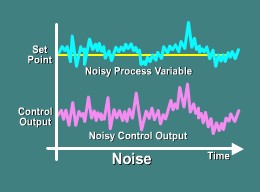
Extraneous signal variations or unwanted sounds that do not represent the intended information. In process control, it refers to input quantities unrelated to actual process conditions. The common-mode rejection characteristic of op amps can be used to cancel noise external to a circuit.

Noise figure

The ratio of the total noise power at the output of an amplifier, referred to the input, to the noise power of the signal source.

Noise reduction rating (NRR)

A measure of the approximate number of decibels that a hearing protection device attenuates, or reduces.

Nominal size

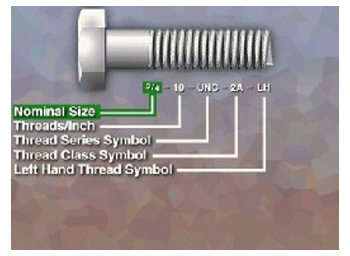
The approximate diameter of a bolt or screw

Nomograph

A graph that uses three or more different scales to represent the values of three or more variables that are related; also called an alignment chart

Non-Sheathed Capacitance Probe

A single capacitance probe that uses the walls of a container and the probe as the two plates of the "capacitor."

Non-Sinusoidal Oscillator

An oscillator that produces a signal that is anything other than a sine wave.

Non-Working Power

Voltage and current that does not perform work.

Non-adjustable Orifice

A restriction, such as a section of tube or pipe, that is used as a simple means of flow control

Non-bulk packaging

Hazardous materials packaging smaller than bulk packaging, with a capacity of 119 gallons or less for liquids, a net mass of 882 pounds or less and capacity of 119 gallons or less for solids, and a water capacity of 1,000 pounds or less for Class 2 gases. Includes containers such as boxes, tanks, and cylinders.

Non-insulated Wire

A bare wire that is not covered with insulation

Non-inverting amplifier

An op amp circuit in which a signal is applied to the non-inverting input terminal.

Non-inverting input terminal

The input terminal of an op amp represented by a positive (+)

Non-linearity

A characteristic of process loops in which an input at one point does not produce the same output as that same input at another point; variations in process gain at different parts of a process variable's range.

Non-permit confined space

Means a confined space that does not contain or, with respect to atmospheric hazards, have the potential to contain any hazard capable of causing death or serious physical harm.

Non-return Valves

Valves that operate like swing check valves to protect the turbine from possible back flow in case the flow of steam to the turbine stops.

Non-selective azeotropic solvents

Solvents that form azeotropes with a variety of compounds and have a wide azeotropic range.

Non-volatile Memory

A type of RAM that does not need power to retain its data

Nonconformance

An event that results in a product that does not meet specifications.

Nonlinear Scale

A scale with divisions that do not have the same value from one end of the scale to the other

Normal Butane

The fourth lightest hydrocarbon molecule (C4H10), a by-product of conversion processes from various units. Often sold mixed with propane as fuel (LPG mix), added to gasoline, or used as a petrochemical feedstock.

Normal Fault

A normal fault is a geologic fault in which the hanging wall has moved downward relative to the footwall. Normal faults occur where two blocks of rock are pulled apart, as by tension or extension of a basin.

Normal Winter

The average gas demand the LDC is expecting to satisfy daily on any year; it is lower than the Design Winter

Normally Closed

A switch or set of contacts that allows current to flow through it when it is not activated (when nothing depresses its actuator). Abbreviated NC.

Normally Closed, Held Open

A switch that allows current to flow through it when it is not activated, but that is held activated by some mechanism. Abbreviated NCHO.

Normally Open

A switch or set of contacts that does not allow current to flow through it when it is not activated (when nothing depresses its actuator). Abbreviated NO.

Normally Open, Held Closed

A switch that does not allow current to flow through it when it is not activated, but that is held activated by some mechanism. Abbreviated NOHC.

Normally Pressured Formation

A formation with pore pressure, proportional to depth, that is roughly equal to the hydrostatic pressure gradient of a column of salt water (0.465 psi/ft).

North arrow

An arrow, which points due north, that is included on a blueprint to help orient the drawing

North pole

The northernmost point of the Earth's axis.

Notes

In electrical diagrams, a section that gives detailed information about certain parts and may list other references. In the NEC, details that typically follow tables to provide clarification or additional information.

Nozzle

A device connected to a hose or pipe to direct and control the flow of fluid. In jet pumps, the part that performs energy conversions to create flow in a fluid system.

Nuclear Magnetic Relaxation

Nuclear magnetic relaxation is the processes by which an excited magnetic state returns to its equilibrium distribution. Nuclear magnetic resonance relaxation measurement can be used for spectral assignment and the study of quadrupolar and paramagnetic interactions, and exchange dynamics.

Nuclear Magnetic Resonance

A phenomenon in which a nucleus absorbs electromagnetic radiation of a specific frequency in the presence of a strong magnetic field.

Nuclear Magnetic Resonance (NMR) Physics

Atomic nuclei spin, and this angular moment produces a weak magnetic field. The NMR technique measures the magnetic signal emitted by spinning hydrogen nuclei protons as they return to their original state following stimulation by an applied magnetic field and pulsed radio frequency energy.

Nuclear Magnetic Resonance Logging

Nuclear magnetic resonance (NMR) logging uses the NMR response of a formation to directly determine its porosity and permeability, providing a continuous record along the length of the borehole.

Nuclear Magnetic Resonance Signals

Magnetic resonance imaging uses the movement of protons within a magnetic field to generate an image. The number of nuclear magnetic resonance signals represents the number of different types of protons in a molecule.

Nuclear Plant

A power plant that uses energy from fission to produce electric power

Nucleation

The stage of crystallization in which small crystals, or nuclei, are formed.

Nucleus

The positively charged, very dense central core of an atom, consisting of protons and neutrons and containing nearly all its mass. The atom as a whole is electrically neutral because the positive nucleus is surrounded by negatively charged electrons.

Nucleus, Atomic Nucleus

The nucleus is the very dense region consisting of protons and neutrons at the center of an atom.

Number Line

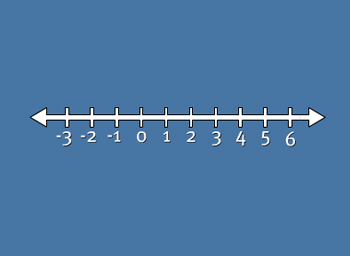
A line with marks, representing numbers, at equal distances form each other

Numerator

In a fraction, the number above the fraction bar, indicating how many parts are needed to express a measurement.

Numerical Reservoir Simulation

Numerical reservoir simulation is the mathematical simulation of a numerical model of a reservoir's petrophysical characteristics to analyze and predict fluid behavior in the reservoir over time.

Numerical Reservoir Simulation Model

A mathematical grid block model of a petroleum reservoir used to simulate and analyze historical fluid behavior and predict future performance, where each block represents a local part of the reservoir.

Numerical Simulation, Reservoir Simulation

A numerical simulation is a calculation that is run on a computer following a program that implements a mathematical model for a physical system. Reservoir simulation is the process of constructing and running a model that mimics the appearance and flow dynamics of an actual reservoir system, including the subsurface porous and permeable reservoir and its other physical components to produce (wellbore) and process the reservoir fluids.

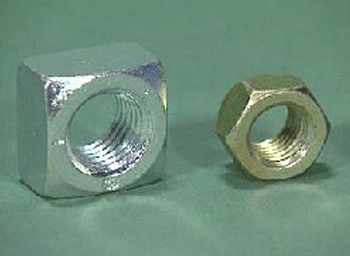
Nut

A perforated block of metal that has internal threads and is used to secure a bolt or screw in place

Nutating Disc Meter

A type of flow meter that uses a disc wobbling about an axis to trap and measure specific quantities of liquid.

near-field

Near-field refers to the receivers (geophones or hydrophones) that are closest to the source.

net sand count

The net sand count is the total effective thickness of a reservoir-quality permeable section of the reservoir, excluding shale streaks and other impermeable, low-porosity zones.

non-stratabound

Does not terminate at geological strata.

nondepositional hiatus

A nondepositional hiatus is often considered as the time value of an episode of nondeposition or of nondeposition and erosion together.