A space or condition that has a pressure lower than atmospheric pressure.
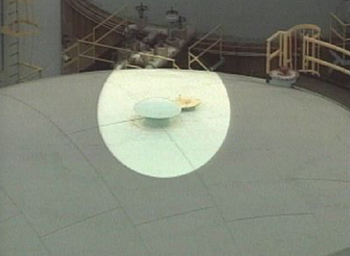
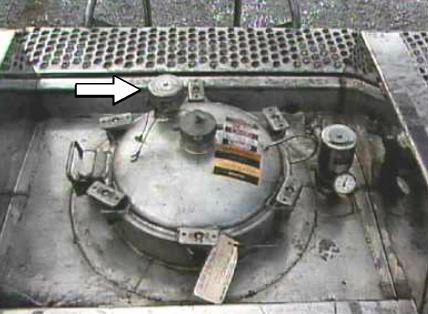
A type of valve that is often installed on storage tanks to allow air into the tank to equalize pressure and prevent a vacuum developing as the tank is being drained.
Distillation at lower than atmospheric pressure; used when high temperatures would cause thermal degradation of the process material.
A distillation tower that operates under a partial vacuum.
A unit that uses reduced pressures to separate gas oils and pitch, or bottoms, from the residuum fraction.
A vent that is used to admit air into a tank to prevent a vacuum from developing during loading or unloading.
Vents that are used to admit air into a tank to avoid pulling a vacuum.
The vadose zone, also known as the unsaturated zone or zone of aeration, is a subsurface area between the land surface and the water table. This is an oxidating environment in which organic matter is destroyed and red ferric iron oxides develop. This region is subject to many physical, chemical, and biological processes.
The outermost shell of an atom consisting of the valence electrons.
The amount a decision maker would be willing to pay for information prior to making a decision. A VOI analysis provides a formal assessment of the value of data acquired, based on the extent to which the data would improve expected payoffs by reducing uncertainty surrounding a decision.
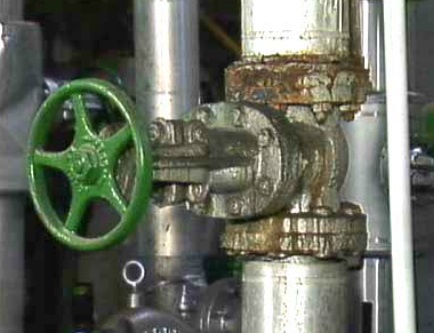
A device designed to control the flow of fluid.
The proper positioning of all valves for a specific operation, ensuring that valves that should be open are open and those that should be closed are closed, according to plant procedures. Also called valve alignment or lining up the system.
The connection between the rod string and the traveling part of the pump.
Devices used to start, stop, or regulate the flow of fluids through pipes and equipments.
A type of axial fan that is basically a tube axial fan with vanes added inside the housing.
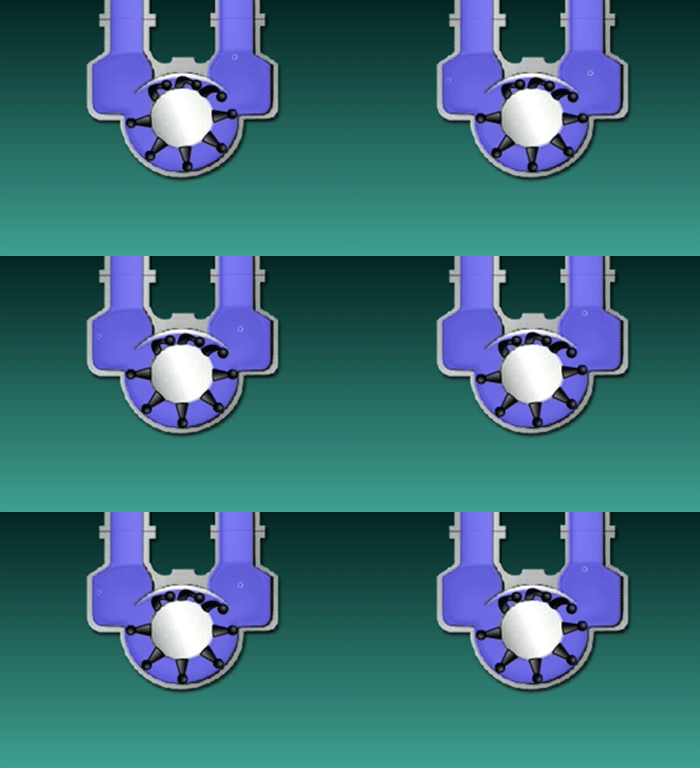
A rotary positive displacement pump that uses rigid or flexible vanes to move liquid.
The parts of a centrifugal pump's impeller that push and move the fluid being pumped, increasing its speed.
The gaseous form of a substance which is normally liquid or solid at atmospheric temperature and pressure; fluid in a gaseous state.
A measurement that indicates whether a gas or a vapor is lighter than air or heavier that air.
A device that is often installed on equipment with oil reservoirs to remove oil vapors by maintaining a slight vacuum in the reservoir.
The process of removing toxic, flammable, or combustible vapors from a storage tank using ventilation equipment.
A condition that develops when hot weather causes gasoline to vaporize too quickly, thereby preventing an adequate supply of fuel to an engine.
The pressure exerted by vapors released from a material at a given temperature when enclosed in a vapor-tight container; the partial pressure created by vapor molecules after evaporation. Also used as a measure of a liquid's volatility.
Equipment that is used together to return, recover, or reduce emissions.
The space in a storage tank that contains the vapors that have formed from the stored liquid.
A comparison of the amount of vapor and the amount of liquid contained in a gasoline blend at a specified temperature and pressure.
The condition in which vapour or gases either blanket the tubes or block off the flow of fluid through a heat exchanger.
A pressure relief device used with some separators.
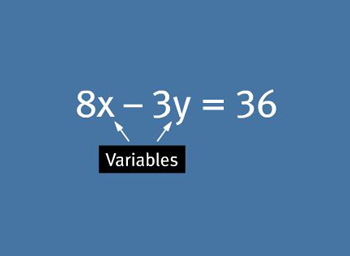
An unknown that can have a wide range of possible values.
A refrigeration system in which air temperature is controlled by the way in which refrigerant flow is directed through the system.
A device that allows the speed of a pump to vary while the speed of its driver remains constant.
Variance refers to a statistical measurement of the spread between numbers in a data set. More specifically, variance measures how far each number in the set is from the mean and thus from every other number in the data set.
A free-standing concrete containment area for a storage tank.
Speed and direction of movement over a period of time, determined by dividing the distance traveled by the travel time. Expressed in units such as feet per minute (FPM) or revolutions per minute (RPM).
The pressure that is developed by the movement of air through a fan system.
A valve or passage that is used to remove air or gases from a heat exchanger.
A valve that allows the escape or venting of gas, air, or NGLs to depressure a cylinder, compressor package, or other equipment.
A system that performs the air movement and ventilation functions in a heating, ventilation, and air conditioning system.
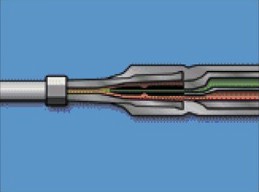
The type of restriction inside an injection torch that increases the velocity of oxygen so that it can draw acetylene into its stream.
The Venturi effect is the reduction in fluid pressure that results when a fluid flows through a constricted section (or choke) of a pipe.
A slide caliper with two scales: a maîn scale and a Vernier scale. Able to take measurements accurate to the nearest thousandth.
A micrometer that permits accurate measurements to within .0001 inch, or .002 mm.
One of the interlocking bones that make up the spinal column.
The stack of bones that make up the spine. Viewed from the side, the spine creates an S-curve.
The permeability perpendicular to the bedding plane.
Vertical seismic profiles (VSP) are borehole seismic measurements used for correlation with surface seismic data, for obtaining images of higher resolution than surface seismic images and for looking ahead of the drill bit.
An indication of how much an oscilloscope's vertical amplifier can amplify a weak signal. Vertical sensitivity is usually given in millivolts (my) per division. The smallest voltage that a general purpose oscilloscope can detect is typically about 1 mV per vertical screen division.
The periodic or oscillatory motion of a physical body in alternately opposite directions. Localized vibration of the hand, wrists, and arms can occur from powered hand tools, while whole body vibration from heavy-duty vehicles or machinery can lead to problems such as back trouble.
A device used to measure the amount of vibration in plant equipment.
A horizontal line placed above a term or terms in a Boolean expression to indicate the presence of a NOT function. (Plural is vincula.)
The subsurface rock in its natural state, before any invasion of fluids and solids from the drilling process.
An apparent ground. The summing junction appears to be electrically grounded whenever the reference junction is grounded, since the summing junction drives to equal the reference junction.
VML programs combine the advantages of e-Learning with engaging learning simulation games and the support of experienced virtual mentors to drive greater retention of key skills. These programs allow individuals or teams to learn at their own pace, from home or office, on a regular schedule.
A viscosifer is an additive that is used to increase the viscosity or the drilling mud.
A property of fluids and slurries indicating their resistance to flow, defined as the ratio of shear stress to shear rate. A measure of a fluid's resistance to gradual deformation by shear stress or tensile stress. The thicker the liquid, the higher its viscosity.
Crude oil's viscosity can vary from a low viscosity liquid to up to tar-like, nearly solid form. Classification according to the API degree: ... Medium crude oil: API gravity from 31.1 °API to 22.3 °API (870 to 920 kg/m3) Heavy crude oil: API gravity from 22.3 °API to 10 °API (920 to 1000 kg/m3).
Substances, such as benzene and butadiene, that can escape from equipment such as valves and pumps.
The tendency of a liquid to vaporize or evaporate; a reference to how easily a liquid can change into a vapor. The higher a liquid's volatility, the more easily it becomes a vapor.
The unit by which voltage is measured. One volt is defined as the voltage necessary to drive a current of one ampere through a resistance of one ohm, or the voltage across a conductor when one ampere dissipates one watt of power. A small letter v or a capital V is typically used as an abbreviation.
The product of the voltage (in volts) and the current (in amperes). It comprises both active and reactive power. It is measured in "volt-amperes" and often expressed in "kilovolt-amperes" (kVA) or "megavolt- amperes" (MVA).
The difference in electrical potential between two points that provides the driving force (pressure or force) causing electrons to flow through a circuit, measured in volts. In electrical formulas, voltage is typically represented by a capital E.
A circuit that consists of separate resistors or a tapped resistor that can divide a voltage into several smaller voltages.
An inverting amplifier that has a voltage divider in its feedback path.
A voltage multiplier that provides an output voltage that is twice the input voltage.
A decrease in voltage along a conductor through which current is flowing; the difference of potential across a resistance in a circuit, caused by resistance.
The magnitude of the voltage at a given point in a circuit with reference to another point in that circuit - usually to ground or 0 volts.
A circuit designed to provide an output voltage that is some multiple of the input voltage.
The amount of voltage that a conductor can handle without its insulation breaking down.
A relay designed to operate when voltage is higher (overvoltage) or lower (undervoltage) than desirable in part of a transmission and distribution system.
A voltage source is any device or system that produces an electromotive force between its terminals OR derives a secondary voltage from a primary source of the electromotive force.
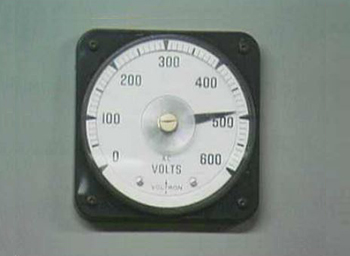
A device used to measure and indicate voltage.
The ratio between the amplitude and the frequency of the voltage applied to an AC motor.
The amount of space occupied by a three-dimensional object; the space available to be filled with contents, as within a tank.
The volumetric cross section is the cross section of a material to photoelectric absorption, in barns/cm3.The volumetric cross section, U, is from the product of the photoelectric factor, PEF or Pe, and the electron density.
The volume of fluid that passes a specific point in a unit of time.
A metering device which measures volume by separating the stream into fixed portions, counting them and releasing them back into the stream.
The part of a centrifugal pump's casing that forms a gradually widening spiral channel around the impeller, where the circulated fluid spreads out, slows down, and its pressure is increased.
Volt-Ohm-Milliammeter. A commonly used piece of electrical test equipment.
A vug is a small-to-medium-sized cavity inside a rock.
Vugs are cavities that are sometimes lined with mineral precipitates. A rock formation containing vugs is described as vugular.