IHRDC Logo

Discover the IHRDC Energy Glossarybeta

Search or select a letter above to browse the glossary.

I

I/O Bus

The network that typically connects input and output smart field devices, controllers, and operator interfaces

ID

Inside diameter; the length of a straight line that passes from one side on the inside surface of a pipe, through the center of the pipe

IDLH

Immediately Dangerous to Life or Health. An atmospheric concentration of any toxic, corrosive, or asphyxiant substance that poses an immediate threat to life, would interfere with an individual's ability to escape from a dangerous atmosphere, or is likely to have adverse delayed effects on health.

IGBT

Insulated Gate Bipolar Transistor. A high-speed, solid-state switch typically used in modern PWM inverter and variable speed drives.

ISO

The International Organization for Standardization.

ISO 9000

A series of international quality system standards and guidelines intended to adopt a consistent quality approach for all companies.

Icon

A small graphic, or "picture," used on graphical user interfaces such as Windows and RSLogix

Identity Law

In logic, the law that states an object is the same as itself: A = A.

Ignite

To heat a flammable material to a point where it catches fire.

Illite

A non-expanding, clay-sized, micaceous mineral. Illite is a phyllosilicate or layered alumino-silicate with a structure constituted by the repetition of tetrahedron–octahedron–tetrahedron (TOT) layers.

Image Table

A PLC data file in which the processor stores the current states of the inputs as it scans them or the desired states of the outputs as it determines them

Imbibition

The displacement of one fluid by another immiscible fluid, absorbing a wetting phase into a porous rock.

Immediate Instruction

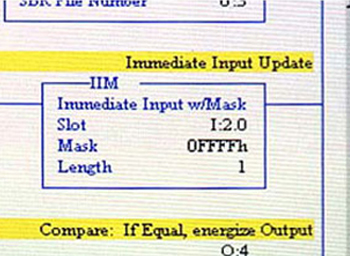
An instruction that scans or sets I/O addresses during the perform-the-logic part of the PLC scan cycle

Immediately dangerous to life or health

An atmospheric concentration of any toxic, corrosive or asphyxiant substance that poses an immediate threat to life or would interfere with an individual's ability to escape from a dangerous atmosphere.

Immediately dangerous to life or health (IDLH)

Any condition that poses an immediate or delayed threat to life or that would cause irreversible adverse health effects or that would interfere with an individual's ability to escape unaided from a permit space.NOTE: Some materials -- hydrogen fluoride gas and cadmium vapor, for example -- may produce immediate transient effects that, even if severe, may pass without medical attention, but are followed by sudden, possibly fatal collapse 12-72 hours after exposure. The victim "feels normal" from recovery from transient effects until collapse. Such materials in hazardous quantities are considered to be "immediately" dangerous to life or health.

Immiscibility

The inability of two substances to dissolve together to form a solution.

Immiscible liquids

Liquids that do not mix with each other.

Immune system

A diffuse, complex network of interacting cells, cell products and cell-forming tissues that includes the thymus, spleen, lymph nodes and lymph tissue, stem cells, white blood cells, antibodies, and the chemicals produced by lymphocytes. The immune system recognizes and attacks pathogens.

Impedance

A circuit's total opposition to current flow: the vector sum of resistance, inductive reactance, and capacitive reactance. In electrical formulas, impedance is typically represented as a capital Z.

Impeller

A device used to move fluid in a centrifugal pump, typically consisting of a series of curved vanes extending from the center of a circular component that mounts onto the shaft and rotates.

Impeller-type reactor

A reactor that uses a motor or turbine driven impeller to mix the reactants with the catalyst.

Impermeable

Having no significant permeability over the life of a field.

Impingement

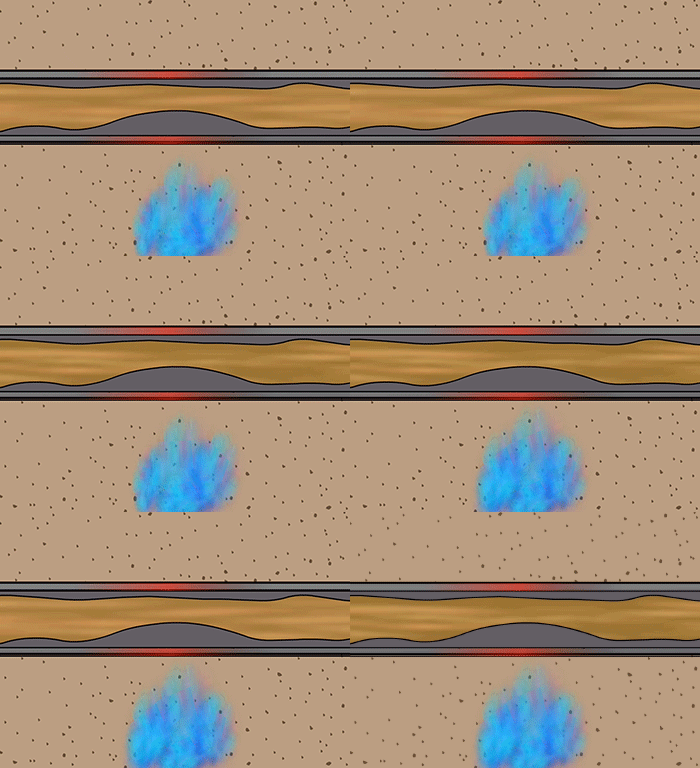
Contact between the flame from a burner and a tube in a furnace

Impressed current

A method of cathodic protection.

Improper fraction

A fraction with a numerator larger than the denominator

Improved oil recovery (IOR)

Term used to describe methods employed to improve the flow of hydrocarbons from the reservoir to the wellbore or to recover more oil or natural gas. Enhanced oil recovery (EOR) would be one form of IOR.

Impulse

A type of turbine wheel blade that causes the wheel to rotate when high pressure steam strikes the blades

In Phase

A situation in which the voltages at the top or bottom of the primary and secondary windings on a transformer are of the same polarity.

In-Line Blending Systems

Blending systems in which the blend components from rundown tanks or directly from process units are metered into a blend header and mixed together.

In-situ recovery

Techniques used to extract hydrocarbons from deposits of extra-heavy crude oil, bitumen or oil shale without removing the soil and other overburden materials.

Inboard

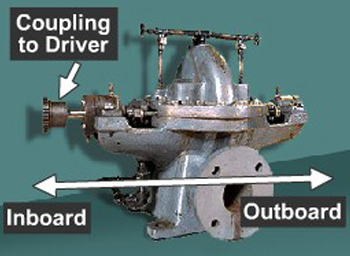
The end of a pump that is closest to the pump's driver

Inch of water

A very small unit of pressure. An inch of water is equal to 0.036 psig.

Inches of Water

Very small units of pressure used to measure differential pressure. An inch of water is equal to 0.036 psig or 0.248 kPa.

Incineration

The process of converting gaseous organic vapor emissions into relatively harmless substances through combustion.

Incinerator

A device that destroys gas stream contaminants by burning them.

Inclined manometer

A type of manometer used to measure pressures that are too low to be measured easily on a U-tube manometer.

Incoherence Function

The incoherence function expresses the lack of coherence between logs, results, response equations and constraints.

Incremental Sample

A sample taken in predetermined quantities at predetermined time intervals.

Indempotent Law

A Boolean algebra law stating that when a Boolean proposition X is OR'ed with itself, the result is the proposition X itself.

Independent Variable

In a ratio control system, the variable that is tied to a percentage of the independent variable

Index

A detailed alphabetical listing of the items covered in the NEC

Indicating silica gel

An adsorbent that removes moisture from substances and indicates adsorption by changing colors.

Indicator

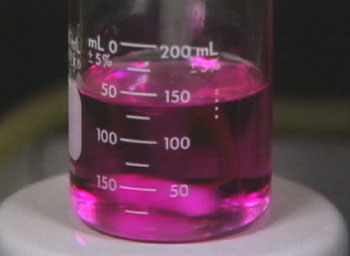
A substance used to change the color of a liquid to give a visual sign that a chemical reaction is complete

Indirect Level Measurement Device

A device that measures a physical aspect of a fluid that varies in proportion to level and uses that information to provide a level measurement

Individual X chart

A control chart that is plotted using single samples taken from a process; often used to monitor processes in which single samples are taken some time apart

Induced Draft Draft Fan

A fan that draws combustion gases out of a boiler

Induced Fractures

Induced fractures are those fractures caused by operational activities such as drilling and hydraulic fracturing.

Induced Voltage

An EMF created by electromagnetic induction.

Induced draft fan

A type of fan that creates a pressure that is less than atmospheric pressure inside a system.

Induced-draft Cooling Tower

A mechanical-draft tower in which air is pulled through the tower by fans

Inductance

A physical property of all conductors and circuits that opposes a change in current flow, measured in henrys. In electrical formulas, inductance is typically represented as a capital L.

Inductance Filter

A filter circuit that smooths out a pulsating DC voltage by opposing changes in current.

Induction

The process that produces a voltage as a result of the interaction of a conductor, a magnetic field, and relative motion between them.

Induction Cup Element

A relay element that uses magnetic fields, created at the pole face of several electromagnets, to create a torque on a cup to close contacts

Induction Disc Element

A relay element that has an electromagnet that is intersected by a metallic disc

Induction Resistivity, Induction Resistivity Log

A wireline log of formation resistivity based on the principle of inducing alternating current loops in the formation and measuring the resultant signal in a receiver. An alternating current of medium frequency (tens of kHz) is passed through a transmitter coil, inducing an alternating magnetic field in the formation.

Induction, Induction Log, Induction Resistivity

A wireline log of formation resistivity based on inducing alternating current loops in the formation and measuring the resultant signal in a receiver. An alternating current of medium frequency (tens of kHz) is passed through a transmitter coil, inducing an alternating magnetic field in the formation.

Inductive Loads

Any devices that have coils of wire in there manufacture can be classed as an inductive load.

Inductive Power

Non-working power that is a result of magnetizing current such as the current required to create a magnetic field in a motor.

Inductive Reactance

The opposition to AC current flow provided by an inductance, measured in ohms. Typically represented as XL in electrical formulas.

Inductor

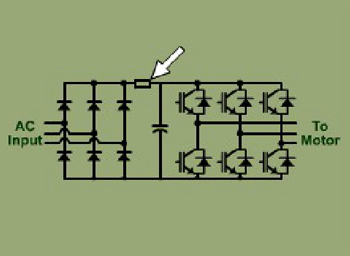
A component specifically designed to increase the amount of inductance in a circuit. In inverter controllers, the part of the DC bus that helps smooth out pulses of DC produced by the converter.

Inductors

An inductor is a passive electrical component that can store energy in a magnetic field created by the electric current passing through it. Typically an inductor is a wire shaped as a coil to create a magnetic field.

Industrial Grade Asphalts

Asphalts that are thinner, or less viscous, than road grade asphalts and are used in applications such as roofing or waterproofing.

Inelastic Neutron Scattering

Inelastic neutron scattering is a neutron interaction in which part of the kinetic energy lost by a neutron in a nuclear collision excites the nucleus. The excited nucleus will usually emit characteristic gamma rays upon de-excitation.

Inelastic Scattering

Inelastic scattering is a fundamental scattering process in which the kinetic energy of an incident particle is not conserved, in contrast to elastic scattering.

Inert Gas

A gas used as a displacement fluid which does react with the prod¬uct being sampled.

Inertia

A property of matter that resists changes in motion

Inferential Meter

A metering device that does not measure volume directly, but as a function of some action related to volume.

Infill wells

Wells drilled into the same reservoir as known producing wells so that oil or natural gas does not have to travel as far through the formation, thereby helping to improve or accelerate recovery.

Infinite Positioning

The characteristic that allows the spool in a directional control valve to be moved anywhere within its range of movement, so that specific ports are completely blocked, partially blocked, or completely open

Influx

Influx into the wellbore occurs when the hydrostatic pressure is low enough to allow formation fluids to enter the wellbore; flushing away from the open wellbore occurs under reciprocal pressure conditions.

Infrared Spectroscopy

A form of spectroscopy that uses radiation in the infrared bandwidth of the electromagnetic spectrum. Abbreviated as IR spectroscopy.

Initial Boiling Point (IBP)

The temperature at which a fraction starts to boil.

Initial Pressure Limiter

A device that is installed on most turbines to regulate inlet steam pressure

Injection Torch

A type of torch that uses a restriction called a venturi to increase the velocity of oxygen, enabling it to draw acetylene into its stream. The gases then flow into the tip, where they are mixed.

Injection Well

An injection well is used to place fluid underground into porous geologic formations.

Injection Wells

Wells used to inject fluids, such as water, steam, or gas, into underground reservoirs to enhance oil and gas recovery or to dispose of waste fluids produced during extraction. Development and Injection wells may be vertical, high angle, horizontal, multilateral or directed to enter the reservoir at favorable locations.

Injection rate

The amount of gas that can be injected into a storage facility on a daily basis

Inlet box

A component in a fan system that provides enough space for air to move evenly into a fan's inlet from around the inlet. Also called a plenum.

Inlet damper

A damper that is located on the inlet side of a fan and used to control air flow into the fan.

Innage

A measurement of liquid level from the bottom of a container to the surface of the liquid.

Inorganic Solids

Solids composed of non-living matter such as rocks, sand, and clay.

Inorganic chemistry

The branch of chemistry dealing with compounds that do not contain carbon.

Input

Data entered into the EFC or instrument system.

Input Device

A real device that is wired to an input module and provides an input to a PLC

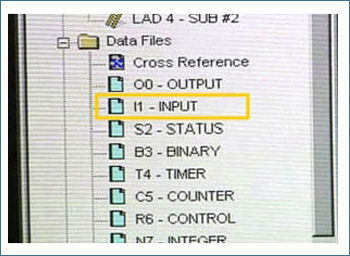
Input Image Table

Input Image Table The part of data memory in which the current states of the real inputs are stored

Input bias current

The average of the currents into the two input terminals with the output at a specified level.

Input capacitance

The capacitance between the input terminals with either input grounded.

Input common-mode voltage range

The range of common-mode input voltage that, if exceeded, may cause the operational amplifier to cease functioning properly. This is sometimes is taken as the voltage range over which the input offset voltage remains within a set limit.

Input current

The amount of current that can be sourced or sinked by the op-amp input. Usually specified as an absolute maximum rating.

Input noise current

The internal noise current reflected back to an ideal current source in parallel with the input pins.

Input noise voltage

The internal noise voltage reflected back to an ideal voltage source in parallel with the input pins.

Input offset current

The difference between the currents into the two input terminals with the output at the specified level.

Input offset voltage

The dc voltage that must be applied between the input terminals to cancel dc offsets within the op-amp.

Input resistance

The dc resistance between the input terminals with either input grounded.

Input voltage range

The range of input voltages that may be applied to either the IN+ or IN. inputs.

Input/Output Testing

A process of elimination method in which the condition of the process entering a component and the condition of the process leaving the component are checked

Inside micrometer

A micrometer used to measure inside diameters and distances between parallel surfaces composed of a micrometer head and attachable rods and collars

Instability

In process control, a loop response characterized by continuing oscillations. In quality control, a condition where abnormal variations exist in a process even though values remain within control limits.

Installed Ground

An intentional electrical connection between electrical equipment and the earth, or ground

Instantaneous Contacts

The contacts on a timer that become energized as soon as the timer becomes enabled

Instruction

A command to a PLC, usually a single item or graphic on a PLC ladder program rung, corresponding to a command or series of commands to the PLC microprocessor.

Instructor-led Training (ILT)

Usually refers to traditional classroom training, in which an instructor teaches a course to a room of learners. Skills and knowledge are taught through lectures, demonstrations, discussions, and presentations. ILT can be extremely beneficial when the material is new or complex.

Instrument

Any device used to measure, indicate, control, or transmit information about a process or system

Instrumentation amplifier

A precision amplifier that is typically a combination of a differential amplifier and two voltage followers.

Insulated Wire

A wire that's covered with an insulating material

Insulated gate field effect transistor (IGFET)

A type of FET. The gate of an IGFET is insulated from the transistor body.

Insulation

A material that is a poor conductor of electrical current

Insulative material

A material that prevents or limits the flow of electrons across its surface or through its volume is called an insulator.

Insulator

A material that offers a great deal of resistance to electron flow, through which current cannot flow easily.

Insurance policies

Are obtained by the operator to cover a number of potential areas of liability including environmental damage, accidents, well blowouts and subsurface damage, damage to property and equipment, and general liability.

Integral Compressor

A compressor with the compression and drive units on the same frame.

Integral Control

A process control algorithm (sometimes called reset control) that relates the control output to the time integral of the error, often combined with proportional control to eliminate offset by essentially repeating the proportional action until the process returns to steady state.

Integrated Circuit

An electronic circuit containing many interconnected active and passive circuit elements formed on a single chip of semiconductor material. These components are particularly vulnerable to voltage spikes and static discharges.

Integrated Travel Time, Integrated Transit Time

Integrated travel/transit time is the amount of time for a wave to travel a certain distance, proportional to the reciprocal of velocity, typically measured in microseconds per foot by a sonic/acoustic log.

Integrator

A control device or circuit whose output is a total, summed over time, of the input; also called a totalizer.

Intelligent (Smart) Module

A type of I/O module that contains a microprocessor to perform sophisticated data manipulation

Intensity

The loudness of sound, measured in decibels.

Interactive Petrophysics

Interactive Petrophysics is a petrophysics package used as a tool by Petrophysicists, Geologists and Reservoir Engineers.

Intercept Valves

Hydraulic cylinder actuated valves in a reheat steam system that stop the flow of steam to the IP section of the turbine in case of turbine overspeed.

Interconnection Diagram

A drawing that shows the connection points between two or more units

Intercooler

A cooling device for cooling gas between stages on multi-stage compressors.

Interface

The point of interaction between persons, groups, systems, etc. In process engineering, the contact surface or point where two liquid phases or two fluids (such as oil and water) separate or meet.

Interface Module

In PLC systems, a module that plugs into a PC used as a programming terminal to allow the PC to communicate with a PLC network

Interface Panel

A device used to convert trip signals to other types of signals and back again during a transfer trip

Interfacial Tension

The force that holds the surface of a particular phase together when two phases are present (gas/oil, oil/water, or gas/water), normally measured in dynes/cm. Surface tension applies to a single liquid surface, whereas interfacial tension applies to the interface of two immiscible liquids.

Intergranular

Intergranular is situated or occurring between grains or granules.

Interim Assessment Results (IAR)

Prior to Assessor Assessment, the lower of the Employee Assessment and the Supervisor Assessment scores.

Interlock

A discrete control function or mechanical/electrical connection that prevents or enables an action depending on the state of another variable, ensuring equipment operations occur only in a specific sequence.

Interlocked Contactors

Contactors whose control circuits have been wired together either to prevent their being closed at the same time or to make certain that one does not close before the other has already closed

Intermittent monitoring

A method of source sampling in which samples are collected periodically and taken to a laboratory for analysis; also called wet chemistry.

Intermitter

A regulation device used in production of a flowing well. The well flows for several short periods each day and then closed in.

Internal Audit

An audit of a plant's quality system performed by employees of the plant.

Internal Auxiliary Relay

A relay that responds to the operation of multiphase or ground elements to close contacts; also called a telephone relay

Internal Heat

The heat produced when current flows through a conductor

Internal Reflux

Liquid in a distillation tower that comes from condensed vapours; used to help separate a mixture into components

Interruptible customer

A customer receiving service under rate schedules or contracts which permit interruption of service on short notice due to insufficient gas supply or capacity to deliver that supply

Interruptible service

Low-priority service offered to customers under schedules or contracts which anticipate and permit interruption on short notice, generally in peak-load seasons

Interval Transit Time, Interval Travel Time

The interval transit time is the amount of time for a wave to travel a certain distance, proportional to the reciprocal of velocity, typically measured in microseconds per foot by an acoustic log.

Intervertebral Disc

A fibrous, fluid-filled sac that separates two vertebrae in the spine. The discs act as a cushion between the vertebrae and allow the spine to flex and bend.

Introduction

Select a term from the left to see the definition of that term.

Invaded

, or The invaded, or flushed, zone is the volume close to the borehole wall in which some, or all, of the moveable fluids have been displaced by mud filtrate. It consists of the flushed zone and the transition zone.

Invaded Zone Water Saturation

The water saturation (Sxo) in the formation zone adjacent to the borehole that has been invaded by drilling mud filtrate.

Invaded Zone, Flushed Zone

The invaded or flushed zone is the volume close to the borehole wall in which some or all of the moveable fluids have been displaced by drilling mud filtrate. It consists of the flushed zone and the transition zone.

Invaded, or Flushed, Zone

The volume close to the borehole wall in which some or all of the moveable fluids have been displaced by mud filtrate, consisting of the flushed zone and the transition zone.

Invaded, or Flushed, Zone, Invasion

The invaded, or flushed, zone is the volume close to the borehole wall in which some, or all, of the moveable fluids have been displaced by mud filtrate. It consists of the flushed zone and the transition zone.

Inversion

Inversion is the mathematical process of calculating the cause from a set of observations.

Invert

To reverse positions of two items; used with fractions to reverse the positions of the numerator and the denominator

Inverter

See NOT gate.

Inverter Section

The part of an inverter controller that contains the high-speed switches typically IGBTs that apply voltage to a motor

Inverting amplifier

An op amp circuit in which a signal is applied to the inverting input terminal; the output signal is opposite in polarity to the input signal.

Inverting input terminal

The input terminal of an op amp represented by a negative (-) sign. An inverting input terminal will invert (reverse) the polarity of any signal applied to it.

Inverting summing amplifier

See Summing amplifier.

Ion

An atom or molecule that has lost or gained one or more electrons, giving it a net positive or negative electrical charge. Positive ions (cations) have lost electrons; negative ions (anions) have gained electrons.

Ion exchange resin

Plastic beads containing numerous charged areas; used to exchange ions.

Ion exchanger

A device used to accomplish ion exchange; a demineralizer.

Ion-selective Electrodes

Electrodes that are designed to sense only specific ions in a fluid. Also called ion-specific electrodes. Abbreviated as ISE's

Ionization

A chemical change by which ions are formed from a neutral molecule of an inorganic substance.

Ions

An atom or group of atoms that carries a positive or negative charge as a result of having lost or gained one or more electrons

Iron Sponge

A batch process that uses a chemical reaction to sweeten sour gas. Wood chips soaked with iron oxide are mixed with hydrogen sulfide to form ferrous sulfide (Fe2S3), which must then be disposed of carefully because it will spontaneously combust when exposed to air.

Irreducible Water Saturation

The minimum fraction of the pore space occupied by water when the hydrocarbon content is at maximum (Swirr), representing the minimum water saturation that can be established using mechanically forced fluid displacement.

Irreducible Water Saturation, Critical Water Saturation

The fraction of the pore space occupied by water when the hydrocarbon content is at maximum (Swirr), sometimes termed the critical water saturation.

Irritant

A chemical that is not corrosive, but causes a reversible inflammatory effect on living tissue by chemical action at the site of contact

Iso-butane

Gaseous hydrocarbon (C4H10) found in natural gas. Used as an additive to gasoline to add volatility during cold weather...

Iso-octane

The product of a reaction between butylene and isobutane; consists of eight carbon atoms and 18 hydrogen atoms.

Isobutane

A chemical compound (also known as 2-methylpropane or methylpropane) with molecular formula C4H10, consisting of four carbon atoms and 10 hydrogen atoms. A colorless, odorless gas that is reacted with olefins in the alkylation process.

Isobutane-to-olefin ratio

The amount of isobutane that is fed to the reactor in an alkylation unit, divided by the amount of olefins.

Isoheptane

The product of a reaction between propylene and isobutane; consists of seven carbon atoms and 16 hydrogen atoms.

Isolating

See Blocking in.

Isolation

The process by which a permit space is removed from service and completely protected against the release of energy and material into the space by such means as: blanking or blinding; misaligning or removing sections of lines, pipes, or ducts; a double block and bleed system; lockout or tagout of all sources of energy; or blocking or disconnecting all mechanical linkages.

Isolation Valve

A valve that can be used to shut down or isolate a section of pipe or equipment, such as a gauge glass from the container to which it is attached.

Isomerization

A reforming reaction in which a paraffin is converted to an isoparaffin.

Isomerization unit

A unit that changes straight-chain paraffins into branched-chain paraffins that are used as a feed for an alkylation unit.

Isometric View

A method of presenting three-dimensional objects in two dimensions that eliminates the distortion of shape created by true perspective, where all lines on each axis are parallel and do not converge.

Isoparaffin

A hydrocarbon with a branched-chain, single-bonded arrangement of carbon atoms; the product of a reaction between an olefin and isobutane.

Isosceles triangle

A triangle that has two equal sides and two equal angles

Isostripper

A tower in the fractionation section in which the unreacted hydrocarbons are separated from the alkylate; also called a de-isobutanizer.

Isotopes

Isotopes are each of two, or more, forms of the same element that contain equal numbers of protons but different numbers of neutrons in their nuclei, and hence differ in relative atomic mass but not in chemical properties.

Isotropic

Isotropic is having a physical property which has the same value when measured in different directions.

ichnofacies

An ichnofacies is an assemblage of trace fossils that provide an indication of the conditions that their formative organisms inhabited.

igneous

Igneous rocks are a category of rocks that are formed through the cooling and solidification of molten magma. These can be formed both below and above Earth's surface. Common igneous rocks include granite, gabbro, basalt, obsidian, pumice and rhyolite.

immiscible

Immiscible liquids do not form a homogeneous mixture when added together.

inchnospecies

An ichnospecies is a species-level classification within ichnology, the study of fossilized traces, analogous to a species classification in biological taxonomy. It is essentially a name given to a specific type of trace fossil, such as a footprint, burrow, or trail.

indurated

A condition of a rock or soil hardened or consolidated by pressure, cementation, or heat.

inertial systems

A frame of reference in which a body remains at rest or moves with constant linear velocity unless acted upon by forces.

injectite

Injectites are structures formed by sediment injection.

interdune

Interdune refers to the relatively flat area of land situated between sand dunes, essentially the low-lying space between individual dune ridges where sediments may accumulate or be eroded by wind, depending on the local conditions. This can also describe the sedimentary deposits found within these areas between dunes.

intraclasts

Intraclasts are irregularly shaped grains that form by syndepositional erosion-erosion simultaneous with deposition-of partially-lithified sediment.

isochronous stratal surfaces

Isochronous stratal surfaces are geological layers that have the same age or time value across a given area, indicating that they were formed simultaneously. This concept is important in stratigraphy for understanding the temporal relationships between different rock layers.

isoclinally

Inclining or dipping in the same direction.

isopach map

An isopach map shows thickness variations within a rock unit. Isopachs are contour lines of equal thickness over a mapped area.

isostatic subsidence

The crust floats buoyantly on the asthenosphere, with a ratio of mass below the "surface" in proportion to the crust's density and the density of the asthenosphere. If additional mass is added to a local area of the crust through deposition, the crust subsides to compensate and maintain isostatic balance.

isotime

Isotime are lines or contours of equal reflection time or time intervals.

isotransit time

Isotransit times are contours that designate the same transit times.