IHRDC Logo

Discover the IHRDC Energy Glossarybeta

Search or select a letter above to browse the glossary.

H

HART Interface

Highway Addressable Remote Transducer. A device that is often used in PLC systems as part of a device-type network.

HART Protocol

A standard communications protocol that governs the transmission of data through networks

HBV

A severe liver infection caused by the hepatitis B virus. Hepatitis B is transmitted by sexual contact and blood to blood contact from: transfusions, needlesticks, cuts, scrapes, sores and skin irritations.

HCV

A severe liver infection caused by the hepatitis C virus. Hepatitis C is transmitted by sexual contact and blood to blood contact from: transfusions, needlesticks, cuts scrapes, sores and skin irritations.

HF acid

Hydrofluoric acid, or anhydrous hydrogen fluoride; a type of catalyst commonly used in alkylation units.

HF stripper

A piece of equipment used to separate the hydrocarbons from entrained HF acid in the reactor effluent.

HIV

Human immunodeficiency virus, a virus that breaks down the human body's natural immune system. HIV infection leads to AIDS.

HMI

Human-Machine Interface. The controls that allow people to interact with a machine or process control system; a broader term than operator interface.

Half-Splitting Method

Aprocess of elimination method in which each test performed on a process during troubleshooting divides the part of the process being tested in half

Half-Wave Rectifier

A rectification device or circuit that conducts during one half of an AC cycle, thus producing one DC output pulse during each AC cycle.

Half-Wave Voltage Doubler

A circuit that develops an output pulse during one half of the AC input cycle; the output is equal to twice the input voltage.

Half-life

Half-life is the amount of time required for half of the unstable, radioactive atoms in a sample to undergo radioactive decay.

Half-splitting

A troubleshooting method in which each test performed on a circuit reduces the remaining number of possible causes of a problem by half

Halite

Halite, commonly known as rock salt, is the mineral form of sodium chloride, NaCl.

Halogen

A highly reactive element whose atoms need only one more electron to complete their valence shell.

Halogenation

A reaction in which atoms from the halogen group are added to a double-bonded hydrocarbon to form a new compound.

Hammer drill

A power drill that hammers, or pounds, as it rotates

Hamstrings

The muscles in the back of the thighs.

Hand-operated drum pump

A manually operated pump that is often used to move liquid from large drums to smaller containers.

Hard Drive

The long-term storage area for a computer, containing its operating system instructions, data files, and any application programs that have been installed

Hard Water

Water that contains a lot of hard ions, such as calcium and magnesium ions

Hardware

The physical mechanical, magnetic, and electronic components of a computer, such as the monitor, hard drive, CPU, keyboard, etc.

Hardwired

Directly connected by wires that determine the fixed connection functionality, as opposed to connected through programmable circuits

Harmonic Distortion

An electrical effect created when current is drawn at more than one frequency.

Hartley Oscillator

An LC oscillator that produces a sinusoidal wave. An autotransformer or tapped coil is used for the feedback circuit.

Hassler Holder

Hassler type core holders are defined as core holders that have radial pressure applied to the core sample.

Hazard Communication Standard (HAZCOM)

The OSHA standard that requires all companies to educate employees about hazardous chemicals in the workplace and the risks associated with those chemicals, including how to work safely in their presence.

Hazardous Material Identification System (HMIS)

A labeling system that uses color coded sections to rate the flammability, reactivity, and health risks of a hazardous chemical with regard to its use and handling in a workplace. The label also identifies personal protective equipment that should be used by individuals handling the chemical.

Hazardous Material Identification System (HMIS®)

A hazardous material labeling system that uses color-coded sections to rate the flammability, reactivity, and health risks of a hazardous substance. The label also identifies personal protection equipment required for personnel handling the material.

Hazardous Waste

Waste containing substances that can harm the environment if small quantities of them escape into the air, water, or ground

Hazardous atmosphere

An atmosphere that may expose employees to the risk of death, incapacitation, impairment of ability to self-rescue (that is, escape unaided from a permit space), injury, or acute illness from one or more of the following causes:1. Flammable gas, vapor, or mist in excess of 10 percent of its lower flammable limit (LFL);2. Airborne combustible dust at a concentration that meets or exceeds its LFL;3. NOTE: This concentration may be approximated as a condition in which the dust obscures vision at a distance of 5 feet (1.52 m) or less.4. Atmospheric oxygen concentration below 19.5 percent or above 23.5 percent;5. Atmospheric concentration of any substance for which a dose or a permissible exposure limit is published in Subpart G, Occupational Health and Environmental Control, or in Subpart Z, Toxic and Hazardous Substances, of this Part and which could result in employee exposure in excess of its dose or permissible exposure limit; 6. Any other atmospheric condition that is immediately dangerous to life or health.

Hazardous chemical

Any chemical that is a physical hazard or a health hazard, for which there is statistically significant evidence that acute or chronic health effects may occur in exposed employees. This includes carcinogens, toxic or highly toxic agents, reproductive toxins, irritants, corrosives, sensitizers, hepatotoxins, nephrotoxins, neurotoxins, agents that act on the hematopoietic system, and agents that damage the lungs, skin, eyes, or mucous membranes.

Hazardous energy

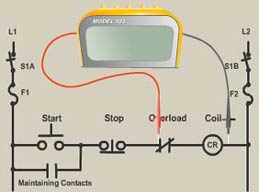
Any kind of energy that is capable of injuring or killing people or damaging equipment or property.

Hazardous gas analyzer

An analyzer that is used to measure the concentration of a hazardous gas, such as sulfur dioxide, in an area.

Hazardous material

Any material or substance that is capable of posing an unreasonable risk to health, safety, and property, or presents a danger to human health or the environment.

Hazardous materials class

Any one of nine categories of hazardous materials established by the Department of Transportation. Each class consists of hazardous materials with similar properties.

Hazardous waste site

A facility or location within the scope of the HAZWOPER standard at which hazardous waste operations take place.

Head

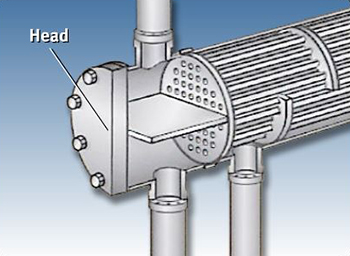
The pressure exerted by a liquid as a result of its depth, expressed as vertical distance. For water, 1 foot of head equals 0.433 PSI. In heat exchangers, the part that directs flow into or out of the tubes.

Head Wave

Head waves are the sound waves refracted back into the borehole.

Head, Logging Head

The head, or logging head, is the wireline cable and logging tool attachment mechanism.

Header

A relatively large-diameter pipe that delivers collected material to a single discharge point.

Health hazard

A chemical, mixture of chemicals, or pathogen for which there is statistically significant evidence that acute or chronic health effects may occur in exposed employees. Includes carcinogens, toxic agents, reproductive toxins, irritants, corrosives, sensitizers, and agents that damage various body systems. Also includes stress due to temperature extremes.

Heat

A form of energy that can be stored or transferred, related to the motion of a body's molecules. Also, energy in transit from one place to another due to a temperature difference.

Heat Content (BTU Content)

A measure of a fuel's heating capability.

Heat Exchanger

A device used to transfer heat from a hotter fluid to a cooler fluid. Examples include shell and tube exchangers, radiators with finned tubes on power transformers, and devices that allow hot and cold fluids to flow next to each other.

Heat Exchanger Train

A group of heat exchangers in series.

Heat Sink

An area or substance that receives and absorbs heat, whether from a refrigerant in a refrigeration system or from a component through conduction (e.g., a metal part used to dissipate heat from power transistors).

Heat Source

An area or substance from which heat transfers during a heat transfer process, such as the source from which a refrigerant absorbs heat in a refrigeration system.

Heat balance

The principle that the heat supplied in the charge and regenerated catalyst is balanced by the heat used in the cracking reaction and retained in the spent catalyst.

Heat pump system

A refrigeration system that provides both heating and cooling functions.

Heat transfer

The naturally occurring movement of heat from a region or substance at a higher temperature to one at a lower temperature.

Heat-shrinkable Tubing

An insulating material that is heated to shrink it so that it seals and insulates a connection

Heating, ventilation, and air conditioning system

A group of interrelated devices that perform specific functions, including temperature control, air movement and ventilation, air cleaning, and air moisture control.

Heating-Degree-Days

The number of degrees that a given day's average temperature is below 65°F (15.5°C in European countries)

Heavy Hydrocarbons

The components of a hydrocarbon mixture with six or more carbon atoms.

Heavy Hydrocarbons / Heavy Ends

The components of a hydrocarbon mixture that have the largest number of carbon atoms, the highest boiling point and highest viscosity; the hexanes and heptanes in a natural gas stream.

Heavy Oil

Crude oil with high viscosity and high specific gravity, typically with an API gravity less than 20°. It generally does not flow easily.

Heel

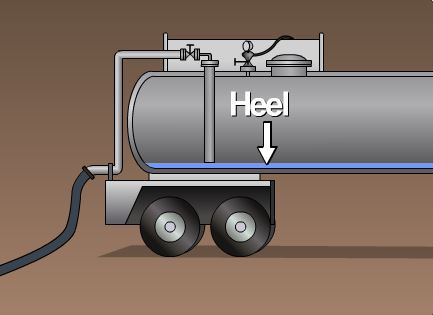
Product or residue that remains in a tank, carbon bed, or vessel after unloading or regeneration.

Helium Gas

Helium is a chemical element with symbol He and atomic number 2. It is a colorless, odorless, tasteless, non-toxic, inert, monatomic gas, the first in the noble gas group in the periodic table. Its boiling point is the lowest among all the elements.

Help Portal

A collection of useful information “articles” on various aspects of CMS Online, including functionality, reporting, administration, process and methodology and technical specifications. Access at Dashboard > 9-dot icon (upper right) > Resources > Documentation.

Hemispheroid

A vertical cylindrical pressure tank with a rounded (spherical) top; also called a dome-roofed tank. Generally used as a low-pressure tank.

Heptacable

Heptacable is a wireline logging cable with seven insulated copper wires located in the centre of the cable.

Heptane

A hydrocarbon of the paraffin series; one of the heavy ends.

Herniated disc

An MSD that results when a disc that separates the vertebrae becomes weak over time and bulges out. When a herniated disc presses against a nerve it can be extremely painful.

Hertz

The SI unit of frequency, equal to one cycle per second. In electrical formulas, hertz is typically abbreviated as Hz.

Heterogeneity

A material that is heterogeneous is one that is distinctly non-uniform in composition or character.

Heterogeneity, Heterogeneous

A material that is heterogeneous is one that is distinctly non-uniform in composition or character.

Heterogeneous

Distinctly non-uniform in composition or character.

Heterogeneous mixture

A mixture consisting of two or more ingredients that remain separate and distinct from each other after the ingredients have been combined.

Heterogeneous mixtures

Mixtures that consist of separate and distinct parts that are easily separated by mechanical means.

Heuristics

Heuristics are methods for solving problems in a quick way that delivers a result that is sufficient enough to be useful given time constraints.

Hex

The commonly used, shortened form of the term 'hexadecimal".

Hexadecimal Numbering System

The numbering system based on powers of sixteen.

Hexane

A volatile liquid paraffin hydrocarbon molecule (C6H14) found in petroleum and natural gas streams; one of the heavy ends.

High Limiter

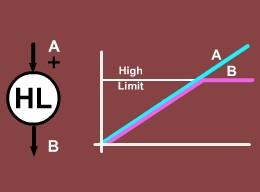
A control device in which the output tracks the input but only up to a certain input level; the input may go higher, but the output cannot

High efficiency particle (HEPA) filter

A type of specialty filter that is designed to trap very fine particles contained in air.

High potential test

A go/no-go test of the condition of a generator's insulation; usually performed by applying a test voltage across the generator windings and observing whether the insulation withstands the test voltage.

High pressure side

The part of a refrigeration cycle from the discharge of the compressor to the inlet of the expansion valve.

High pressure tank

A tank that is capable of handling pressures in excess of 15 psig; also called a pressurized tank.

High speed rotor

See cylindrical rotor.

High-Pass Filter

A high-pass filter passes high-frequency signals, but reduces the amplitude of signals with frequencies lower than the cutoff frequency.

High-level output voltage

The highest positive op-amp output voltage for the bias conditions applied to the power pins.

High-speed mixer

A mixer with a specialized impeller, often used to pre-mix solid ingredients before they are added to a main mixture.

High-voltage Conductor

A conductor that is designed to safely handle over 2,000 volts

Hip flexors

The muscles in the front of the hips.

Histogram

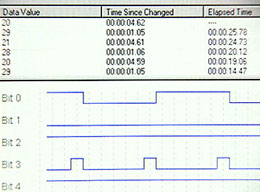
A software troubleshooting tool that allows building and displaying a historical record of a specific data word.

History Matching

History matching is the act of adjusting a model of a reservoir until it closely reproduces the past behavior of a reservoir. The historical production and pressures are matched as closely as possible.

Hitch

Any of several sling arrangements, or patterns, that can be used to attach a lifting device to a load

Hoist

A lifting device that uses wire rope or chain and a set of gears to provide a mechanical advantage.

Hold down

An anchoring device for retaining a rod pump in its working position.

Holding current

The minimum amount of current flow required to keep an SCR in a highly conductive state.

Holdup, Hold-up

Holdup is the volume fraction of pipe occupied by a particular fluid in multi-phase flow.

Homogeneous mixture

A mixture consisting of two or more ingredients that do not remain separate and distinct, once they are evenly dispersed within one another.

Homogeneous mixtures

Mixtures that consist of one or more substances dispersed uniformly in another substance.

Homogenous

Uniform in composition or character.

Hook

A J-shaped rigging component or fitting used to connect rope or chain to other rigging equipment for lifting and moving loads.

Hook Load

The total force pulling down on the hook, including the weight of the drill string in air, the drill collars, and any other bottom hole assembly equipment.

Hopper

A funnel-shaped vessel, or receptacle, with a relatively large opening at the top, through which material is loaded into the vessel, and a smaller opening at the bottom, through which material is discharged from the vessel.

Horizontal Permeability

The permeability along the bedding plane.

Horizontal drilling

A drilling technique whereby a well is progressively turned from vertical to horizontal so as to allow for greater exposure to an oil or natural gas reservoir. Horizontal laterals can be more than a mile long. In general, longer exposure lengths allow for more oil and natural gas to be recovered from a well and often can reduce the number of wells required to develop a field, thereby minimizing surface disturbance. Horizontal drilling technology has been extensively used since the 1980s and is appropriate for many, but not all, developments.

Horsehead

The curved component of the beam assembly located over the wellhead.

Hose

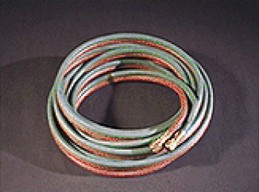
The component of an oxy-fuel gas welding rig that transports oxygen and acetylene from the regulators to the torch

Hose-line

A breathing apparatus where air is supplied by means of a hose connected to a fresh air manifold

Hot Spot

An overheated part of a furnace tube; may be cause by insufficient process fluid flow or by flame impingement.

Hot Surge Tank

A storage tank that holds de-aerated feedwater to supply the demands of the feedwater system, if needed; also referred to as a de-aerator storage tank or a feedwater storage tank

Hot work

Any work that produces enough heat to be a potential ignition source for a flammable or combustible material.

Hot work permit

The employer's written authorization to perform operations (for example, riveting, welding, cutting, burning, and heating) capable of providing a source of ignition.

Hotwell

The bottom section of the main condenser

Huddling Chamber

The chamber in a spring-loaded safety valve to give additional lift which results in a popping action and prevents the disc from slamming into the seat.

Humidifier

A device that adds moisture to air.

Humidistat

A device used to control the amount of moisture contained in conditioned air.

Humidity

The amount of moisture or water vapor contained in a given volume of air.

Hydrate

Ice-like accumulations formed by the combination of water and hydrocarbon molecules.

Hydrates

Solids (ice) formed by a mixture of water vapor and hydrocarbons at the proper temperature and pressure.

Hydraulic Flow Unit

Hydraulic flow units represent the zones of the reservoir rock that can be mapped and correlated and have constant petrophysical and geological properties affecting the fluid flow.

Hydraulic Fracturing

The fracturing of rock by a pressurized liquid. A completion technique (commonly known as fracking) in which typically water is mixed with sand (proppant) and chemicals, and the mixture is injected at high pressure into a wellbore to create small fractures (typically less than 1mm) through which oil and gas may migrate to the well. In use since the 1940s.

Hydraulic Fracturing, Fraccing

Hydraulic fracturing, or fraccing, is the fracturing of rock by a pressurized liquid. Induced hydraulic fracturing or hydro fracturing, commonly known as fracking, is a technique in which typically water is mixed with sand and chemicals, and the mixture is injected at high pressure into a wellbore to create small fractures (typically less than 1mm), along which fluids such as gas and oil may migrate to the well.

Hydraulic fracturing fluids

Mixture of water and proppant along with minor amounts of chemical additives used to hydraulically fracture low permeability formations. Water and sand typically comprise up to 99.5 percent of the mixture.

Hydraulic jack

A portable jack in which the lifting or pushing force is supplied by pressurized hydraulic fluid

Hydro testing

See Water testing

Hydrocarbon

A chemical compound made up of hydrogen and carbon, generally used to identify oil and natural gas products. Examples include methane, propane, etc.

Hydrocarbon Pay

Hydrocarbon pay denotes a portion of a reservoir that contains economically recoverable hydrocarbons.

Hydrocarbon Pore Volume

The hydrocarbon pore volume (HPV) is the product of the volume of a reservoir multiplied by the porosity multiplied by the hydrocarbon saturation.

Hydrocarbon Source Rock, Petroleum Source Rock

Hydrocarbon, or petroleum, source rock is defined as the fine-grained sediment with sufficient amount of organic matter, which can generate and release enough hydrocarbons to form a commercial accumulation of oil or gas.

Hydrocarbons

Organic chemical compounds consisting wholly of hydrogen and carbon, whose densities, boiling points, and freezing points increase as their molecular weights increase. They often occur in nature as petroleum, natural gas, coal, and bitumens.

Hydrocracker

A unit that uses hydrogen and a catalyst to crack hydrocarbons into lighter, more valuable products.

Hydrocracking

Reforming reactions in which naphthenes are converted to paraffins, and larger paraffins are converted to smaller paraffins.

Hydrodesulphurization

A hydrotreating reaction in which hydrogen is used to remove sulfur.

Hydrodynamics

Hydrodynamics is the scientific study of fluids in motion.

Hydroelectric Plant

A power plant that uses energy from water stored behind a dam to produce electric power

Hydrofluoric (HF) acid

A common catalyst that is used in an alkylation unit.

Hydrogen

Hydrogen is the chemical element with the symbol H and atomic number 1. Hydrogen is the lightest element.

Hydrogen Dryer

A device that removes moisture from the hydrogen circulating inside a hydrogen-cooled generator

Hydrogen Index

The ratio of the concentration of hydrogen atoms per cm³ in a material to that of pure water at 75°F (surface conditions). The hydrogen index is thus the density of hydrogen relative to that of water.

Hydrogen Make

The hydrogen that is not recycled by the recycle compressor in a catalytic reforming unit; also called export hydrogen.

Hydrogen Purity

The percentage of pure hydrogen in the recycle gas.

Hydrogen Sulfide

Hydrogen sulfide is a chemical compound with the formula H2S. It is a colorless chalcogen-hydride gas, and is poisonous, corrosive, and flammable, with trace amounts in ambient atmosphere having a characteristic foul odor of rotten eggs.

Hydrogen Sulfide (H2S)

(H2S) A highly toxic gas that has an offensive odor.

Hydrogen ion

A positively charged hydrogen particle.

Hydrogen seal oil system

A system of seals used at both ends of an AC generator to prevent hydrogen and air from mixing.

Hydrogen/ Hydrocarbon Ratio

A ratio of the amount of hydrogen in the recycle gas to the amount of hydrocarbon feed.

Hydrogenation

A reaction in which a hydrogen molecule is added to a double-bonded hydrocarbon to form a new compound.

Hydrometer

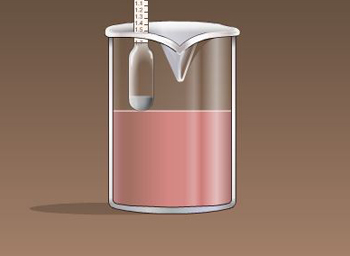
An instrument used for measuring the specific gravity or weight of a material, such as oil samples.

Hydrophone

A hydrophone is an underwater device that detects and records ocean sounds from all directions.

Hydroscopic Clays

Hydroscopic clays readily take up, and retain, moisture.

Hydrostatic Pressure

The normal, predicted pressure for a given depth, or the pressure exerted per unit area by a column of freshwater from sea level to a given depth. Pressure related to the height of a column of liquid.

Hydrostatic Stress

A hydrostatic stress is an isotropic stress that is given by the weight of rock above a certain point.

Hydrostatics

Hydrostatics is a branch of physics that deals with the characteristics of fluids at rest, particularly with the pressure in a fluid or exerted by a fluid (gas or liquid).

Hydrotreater

A unit that uses hydrogen to remove sulfur from various fractions.

Hydrotreating

A process that pretreats feed material by removing contaminants, especially sulfur.

Hydroxyl ion

A negatively charged particle consisting of oxygen and hydrogen.

Hydroxyls

The chemical group, ion, or radical OH consisting of one atom of hydrogen and one of oxygen, which are neutral or negatively charged.

Hygrometer

A device that uses the expansion and contraction of a material, such as hair, to measure humidity

Hyperbolic

A convex hyperbolic reflector has two foci and will reflect all light rays directed at one of its two foci towards its other focus.

Hypotenuse

The side of a right triangle that is opposite the 90 angle

Hysteresis

A condition in which the output action of an instrument or process depends not only on the value of the input but also on whether the input is increasing or decreasing, resulting in the failure of a process variable to respond fully when the control output direction changes.

hard stringers

Hard stringers are thin intervals of hard formation rock, for example, low porosity dolomitic rock.

heat flow

Heat flow is heat that dissipates outward from Earth's core toward the surface.

high line pick-up

High line pick-up is a term for the accidental recording of 60 Hz powerline energy that is in the vicinity of the prospect.

hodogram analysis

A hodogram analysis is a technique by which signals from more than one source are plotted on orthogonal axes. If the signals are from the same source, a straight line will be created. The direction of this line indicates the direction from which the event originated.

holiday check

An inspection method used to detect discontinuities in painted/coated surfaces using specialized tools and equipment. These tools, called holiday detectors, are portable devices that are swept across the coated surface.

hydrocarbon saturation

Hydrocarbon saturation refers to the proportion of pore space in a rock formation that contains hydrocarbons (oil and gas). It's a key parameter in reservoir characterization, and it directly influences estimates of oil and gas reserves and reservoir performance.

hydrography

Hydrography is the science that measures, describes, and maps the physical features of bodies of water, including oceans, seas, lakes, and rivers, primarily for the purpose of navigation and understanding the water environment.

hyperbaric welding

Hyperbaric welding, also known as underwater welding, is a process that involves welding at high pressures, usually underwater.

hypocenters

A hypocenter is the point of origin of an earthquake at depth.