IHRDC Logo

Discover the IHRDC Energy Glossarybeta

Search or select a letter above to browse the glossary.

G

GFCI

See Ground fault circuit interrupter.

GFCI Circuit Breaker

A circuit breaker that also provides ground fault circuit interruption to protect people from electric shock.

Gain

The ratio of an output signal to its input signal, whether in a controller, amplifier, or other device. In conduit installation, a value used to determine where to cut conduit that will be bent.

Gain Accuracy

An indication of how accurately the vertical system of an oscilloscope attenuates or amplifies a signal; usually listed as a percentage error

Gain bandwidth product

The product of the open-loop voltage gain and the frequency at which it is measured.

Gal

The gal is the most commonly used unit of acceleration.

Gamma Radiation

A highly penetrating type of nuclear radiation that may be used to measure the density of a material

Gamma Ray

A gamma ray, or gamma radiation, is a penetrating electromagnetic radiation arising from the radioactive decay of atomic nuclei. It consists of the shortest wavelength electromagnetic waves and so imparts the highest photon energy.

Gamma Ray API Unit

The gamma ray API unit is defined as 1/200 of the difference between the count rate recorded by a logging tool in the middle of the radioactive bed and that recorded in the middle of the nonradioactive bed.

Gamma Ray Densitometer

A gamma ray densitometer is a device for measuring the density of fluids in a completed well, using a radioactive source of gamma rays and a detector.

Gamma Ray Log

A measurement of the natural emission of gamma rays by a formation, used to identify rock types and correlate geological layers across different wells.

Gamma Ray Log, Natural Gamma Ray Log

A gamma ray log is a measurement of the natural emission of gamma rays by a formation.

Gamma Ray Signature, Spectrum

A measure of the distribution of the intensity of gamma radiation versus the energy of each photon.

Gamma Ray Spectroscopy, Natural Gamma Ray Spectroscopy

Gamma ray spectroscopy is the technique of measuring the spectrum, or number and energy, of gamma rays emitted as natural radioactivity by the formation.

Gamma Rays of Capture

Gamma rays of capture are the prompt gamma rays emitted by an excited nucleus.

Gantry

A structural frame on some types of cranes that includes sheaves and drums around which boom hoist lines are reeved

Gap or Skill Gap

The difference between an employee's current performance and the performance required of the specific job title.

Gas

A fluid which can be compressed and completely fills any container in which it is contained.

Gas Allowable

The regulated volume of gas which can be produced over a designated period of time.

Gas Blow-By

Gas blowing by a dump valve as the result of no liquid seal to prevent it from escaping with the oil or water.

Gas Bomb

A container used for sampling gas

Gas Bypass

A method of controlling steam temperature in which a portion of the flue gas bypasses the superheaters

Gas Chromatograph

A device used to determine the concentrations of several materials in a complex mixture or solution

Gas Chromatography

An analytical chemistry process for separating and analyzing compounds that can be vaporized without decomposition.

Gas Gathering

The act of bringing together large volumes of natural gas from different wells by pipelines for the purpose of processing them in a central processing plant or transferring them into sales transmission pipelines.

Gas Initially In Place (GIIP)

GIIP is the abbreviation for Gas Initially In Place.

Gas Initially In Place, GIIP

GIIP is the abbreviation for Gas Initially in Place.

Gas Locking

A condition that occurs when gas fills the pump barrel. The gas pressure holds the traveling valve closed on the downstroke and holds the standing valve closed on the upstroke. With both valves held closed no well fluid can enter the pump.

Gas Metal Arc Welding

A method of arc welding that uses an electrode that is fed off a roll, and a gas, or mixture of gases, to provide a shield. Also called metal inert gas welding, or MIG welding.

Gas Recirculation

A method of controlling steam temperature in which a portion of the flue gas is recirculated to either the windbox or to a point just above or below the burners in the furnace area

Gas Tungsten Arc Welding

A method of arc welding that uses a non-consumable tungsten electrode and a gas, or mixture of gases, to provide shield. Also called tungsten inert gas welding, or TIG welding.

Gas Turbine Plant

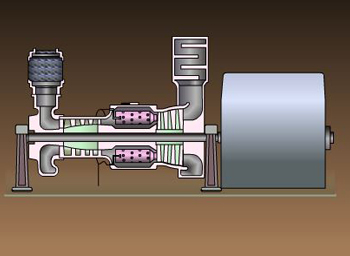
A power plant that uses energy in exhaust gases from a combustor to turn a turbine, which drives a generator

Gas Volume

The amount of gas produced from a well or transported through a pipeline.

Gas oils fraction

The crude oil fraction whose carbon atoms range from C27 to C33, and have boiling points between 450°F and 800°F.

Gas plant

A unit where the gases are sent after being separated from the straight run gasoline part of the fraction; recovers light products such as LPG.

Gas recovery system

The part of a cat cracking unit in which overhead products are separated into non-condensed gases, unstabilized cat-cracked gasoline, and stripping steam condensate.

Gas-Condensate-Glycol (G-C-G Separator)

A vessel where gas is removed and liquid hydro-Separator carbons (condensate) are separated from glycol. Also known as a three-phase separator.

Gas-Oil Ratio

A measure of the volume of gas produced with oil, usually expressed in cubic feet per barrel.

Gas-sealed power transformer

A power transformer that is pressurized with gas from a gas cylinder to keep air and moisture from entering the transformer enclosure.

Gas/Oil Ratio

The gas/oil ratio in an oil field is calculated using measured natural gas and crude oil volumes at stated conditions.

Gas/oil-sealed power transformer

A power transformer that uses a two-part expansion tank mounted along the side of the transformer and a layer of gas and oil to prevent air and moisture from entering the transformer enclosure.

Gases

Normally formless fluids that occupy the space of enclosure and that can be changed to the liquid or solid state only by the combined effects of increased pressure and decreased temperature.

Gases and straight run gasoline fraction

The lightest fraction from crude oil.

Gasket

A piece of flat material softer than a flange that is compressed between two flanges to form a seal when the bolts are tightened.

Gate

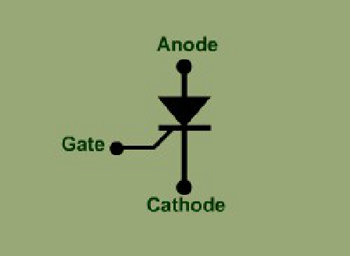
The point on a semiconductor device where an applied potential affects current flow through the device, such as the control terminal of an SCR.

Gate Valve

A valve with a wedge-shaped disc that moves across the opening like a gate, raised and lowered to start or stop flow. Usually positioned fully open or fully closed; not designed for throttling.

Gate mixer

A mixer containing an impeller, or gate, that is made of flat horizontal and vertical bars.

Gauge

To measure the volume of oil in a lease tank.

Gauge Glass

A transparent vertical tube mounted on the side of a liquid container that provides local indication of the liquid level, based on the principle that liquid levels equalize in connected containers.

Gauge Stick

A calibrated stick that is inserted directly into a container of liquid and read at the point where the liquid no longer coats the stick.

Gauger

Company or buyer representative who gauges and tests lease tanks for sales.

Gaussian Function in Machine-learning

Gaussian probability distribution functions summarize the distribution of random variables, whereas Gaussian processes summarize the properties of the functions, e.g. the parameters of the functions. Gaussian processes can be used as a machine learning algorithm for classification predictive modeling.

Gear Box

A set of gears used to reduce the speed and increase the torque of the prime mover.

Gear Pump

A rotary positive displacement pump that uses gears to move fluid.

General purpose tank cars

Tank cars that have working pressures of 100 psi or less.

Generating Unit

A plant boiler, turbine, generator, and associated systems and equipment

Generator

A device or machine that converts mechanical energy into electrical energy. In absorption refrigeration, the section where the refrigerant and the absorbent are separated.

Generator Trip

The opening of a generator's circuit breakers, disconnecting the generator from the power system; may also trip the boiler and the turbine

Geolograph

A geolograph is a device that measures depth and, if installed, is usually found in the doghouse, adjacent to the drilling rig floor.

Geomechanics

The geological specialty that involves understanding how rocks, stresses, pressures, and temperatures interact, including the study of the mechanical state of the Earth's crust and the processes occurring in it under the influence of natural physical factors.

Geophysical Inversion

Geophysical inversion refers to the mathematical and statistical techniques for recovering information on subsurface physical properties from observed geophysical data.

Geopressure

Reservoir fluid pressure that exceeds the hydrostatic pressure for a given depth.

Geosteering

The intentional directional control and optimal placement of a wellbore based on the results of real-time downhole geological and geophysical logging measurements, rather than three-dimensional targets in space, usually to keep a directional wellbore within a pay zone.

Gigahertz

1,000,000,000 hertz; a unit of frequency

Giveaway

Product quality that exceeds the specs for that product.

Gland Follower

A device that compresses packing in a stuffing box to control leakoff

Gland Seal

A device that creates a seal between a shaft and a casing

Gland Sealing Line

A line that delivers water to the stuffing box of a centrifugal pump

Gland Steam Condenser

A part of a gland steam seal exhaust system that collects and condenses steam leaking past a turbine shaft

Gland Steam Exhauster

A blower that draws air and steam from turbine glands to a gland steam condenser

Gland Steam Seal Exhaust System

A system that prevents steam from leaking out and air from leaking in by drawing them out of a gland

Gland Steam Seal System

A system that supplies low pressure steam to seal a turbine

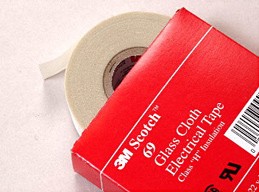
Glass Cloth Electrical Tape

An insulating tape that is coated with a silicone adhesive to make it stick well on a connection

Global-warming potential (GWP)

The relative measure of how much heat a greenhouse gas traps in the atmosphere. It compares the amount of heat trapped by a certain mass of the gas in question to the amount of heat trapped by a similar mass of carbon dioxide. GWP is calculated over a specific time interval, commonly 100 years. GWP is expressed as a multiple of that for carbon dioxide (whose GWP is standardized to 1).

Globe Valve

A valve with a globe-shaped body designed for both on/off control and throttling. Flow is restricted by positioning the internal disc into the flow path, creating a two-90° turn flow pattern.

Glowstick

A device used to test circuits to determine if they are energized.

Glycol

A liquid desiccant used to absorb water vapor from natural gas. Triethylene glycol is the most commonly used glycol.

Glycol (Lean)

Glycol that is free of water.

Glycol (Rich)

Glycol that has absorbed water.

Glycol Seal

A level of glycol between tray and downcomer to force the gas to pass through the bubble caps.

Goggles

Protective glasses set in a flexible frame that sits snugly against the face

Grade markings

Markings that identify the strength and quality of a bolt or screw

Graded Bedding

A bed characterized by a systematic gradation of grain or clast size from base to top, occurring when current velocity decreases and grains are progressively dropped out.

Graduations

The increments marked on a rule

Grain Density

The density of a rock or mineral with no porosity.

Grain Density, Matrix Density

Grain, or matrix, density is the density of the minerals forming a rock, often referred to in core analysis as grain density.

Grain Packing

The distribution of grains and intergranular spaces (either empty or filled with cement or fine-grained matrix) in a sedimentary rock. Controlled by grain size, shape, and degree of compaction; in turn it determines the rock's bulk density.

Grain Size

The diameter or size of individual grains within a consolidated or unconsolidated rock.

Graticule

The grid lines on an Oscilloscope's screen used for measuring traces

Gravity

A scale used to compare the density of liquid petroleum products. Usually expressed as AP.I. gravity.

Gravity-Capillary Equilibrium

Gravity-capillary equilibrium in a reservoir occurs when gravitational and capillary forces are in equilibrium.

Great Circle

A circle on the surface of a sphere that lies in a plane passing through the sphere's center, representing the shortest distance between any two points on a sphere. The best-fitting great circle of lines is deemed a reasonable estimation of structural dip.

Greenhouse gas

Atmospheric gases that are transparent to solar (short-wave) radiation but opaque to long-wave (infrared) radiation, thus preventing long-wave radiant energy from leaving Earth's atmosphere. The net effect of these gases is a trapping of absorbed radiation and a tendency to warm the planet's surface. The greenhouse gases most relevant to the oil and gas industry are carbon dioxide, methane and nitrous oxide.

Grid

A network of power stations, power lines and power users

Grid line system

A system of letters and numbers in the border of some blueprints that can be used to locate specific areas on the drawing

Grooving

A condition that leaves a smooth, slotted area on the surface of a commutator

Gross Generation

A reading that indicates how many megawatts a power plant is producing

Gross Pay

Gross pay is the overall interval in which pay, or commercially viable, volumes occur.

Ground

In DC motors, a condition that leaves a smooth, slotted area on a commutator surface. In electrical circuits, a breakdown in insulation that provides an unintended current path to ground.

Ground Fault

A short circuit or fault that occurs when an unintended path is established between a conductor and a grounded object, such as the metal frame of a motor, allowing electricity to take an undesirable path to earth.

Ground Fault Circuit Interrupter

A Class A protective device that is built in accordance with the UL standard to protect people from electric shock when line-to-ground faults occur.

Ground Loop

The "antenna effect" created by grounding a wire at more than one point

Ground State

The ground state of a quantum mechanical system is its lowest energy state; the energy of the ground state is known as the zero point energy of the system.

Grounded

Conductive equipment connected to earth or to some conducting body that serves in place of the earth.

Grounded tool

An electrical tool with a three pronged plug at the end of its power cord or some other means to ensure that fault current travels to the ground without passing through the body of the user.

Groundwater

Groundwater, or ground water, is water located beneath the surface of the earth.

Group

Sixteen input or output addresses that occupy one word of input or output image table memory. A group may be two, one, or one-half slots in an I/O rack.

Group lockout/tagout

A lockout/tagout procedure that is used when maintenance work involves more than one person.

Growth Faults

Growth faults are faults that were active during the time of deposition.

Gypsum

A soft sulfate mineral composed of calcium sulfate dihydrate, with the chemical formula CaSO4·2H2O.

gas lock

Gas locking is a condition caused by the induction of free gas into the wellbore that interferes with the operation of valves and pump components preventing the intake of fluids.

gauge protection

Gauge protection refers to the use of hard-facing materials, such as tungsten carbide, applied to selective parts of a bit (specifically, cutters on the bit) to prevent excessive wear that can decrease the diameter of the bit thereby resulting in a smaller-diameter (under-gauge) borehole than planned.

geomechanical

Geomechanics is the study of the mechanical condition of the borehole.

guided waves

Guided waves occur in areas with a hard water bottom. The water layer provides a strong velocity contrast with the substratum, which causes most of the energy to be trapped within the water column and guided laterally through the water layer. Guided waves also present on the seismic record as early arrivals.