This a combination program responding to the need of developing critical leadership and core business management skills for Global Energy Leaders. IHRDC’s two popular programs, namely Leadership Essentials for Energy Professionals and Advanced Management Program for Energy Professionals are integrated into a unified program designed for interpersonal effectiveness and professional growth in corporate leadership ranks.
| Program Type | |
|---|---|
| Location | |
| Units | Global Energy Leaders Program – Leadership Skills and Advanced Management (June 8-19, 2026), Leadership Essentials for Energy Professionals (June 8-12, 2026), Advanced Management Program for Energy Professionals (June 15-19, 2026) |
| Dates | June 8 – 19, 2026 (Boston) |
$5,750 – $10,500Price range: $5,750 through $10,500
This program is designed for mid to senior level managers and supervisors as well as aspiring leaders from all sectors of the energy industry who wish to enhance their core leadership and business skills in running departments and organizations.
Learning is accomplished through lectures by experienced instructor with decades of industry experience, group discussions of relevant business case studies, and team participation in challenging business simulation games, in which participant teams are asked to manage and lead the organization and growth of a hypothetical company that faces realistic challenges in energy projects and the need to respond to new investment opportunities.
This session focuses on leadership fundamentals and the most compelling competencies required of today’s energy leaders. It
includes such topics as: what leaders do? leadership theory and styles; motivation and social motives, emotional
intelligence, self-assessment, management versus leadership competencies; leadership competencies: leading self, leading
others, leading the organization; leading stakeholders; leading effective power and influence, leading the organization,
organizational climate, organizational climate survey, improving organizational climate, leading change. Case Studies
Include: What Do Leaders Do? What Makes a Great Leader? Power is the Great Motivator.
Major trends and drivers of change within the international energy industry: anticipating the future of energy trends
throughout the value chains. Latest approaches to strategic planning and its importance for setting company vision and
goals; effective implementation of strategy; planning and implementation of the plan using the Balanced Scorecard.
One of the essential skills of a leader is to acquire, develop and retain high performing employees and teams. This
session is devoted to the talent management processes, the recruiting and building of a competent workforce, the
development of effective teams and the active role that the leader should play to assure that the HR function achieves
the strategic personnel goals of the organization.
Setting a communication strategy: credibility, persuasion, and channel choice. Presentation structure: writing vs.
presentations vs. meetings vs. one-to-one conversations; writing more effectively; making effective presentations;
running efficient meetings; speaking effectively one-on-one. Case studies and workshop sessions.
Financial statements measure the performance of the organization and a leader must have a solid understanding of them in
order to make decisions that achieve the strategic and operational goals of the organization. Key topics include an
introduction to the accounting process; four major financial reports: balance sheet, income statement, cash flow
statement and equity statement; how they impact each other, the major indices that are used to measure the performance
of the company and the various financial decisions that impact performance of the organization. Session will include the
analysis of an emerging company to show the impact of key decisions and the review of actual financial statements of
energy companies.
The essentials of positive negotiation is the “Getting to Yes” process developed at the Harvard Law School and applied
to a petroleum agreements case study by IHRDC. The key steps you will learn in order to achieve successful negotiations
are:
Step One: Discovering Underlying Interests of the Counterparties
Step Two: Generating Options to a Negotiated Solution
Step Three: Identifying and Using Independent Standards
Step Four: Dealing with People Problems
Step Five: Generating Alternatives to a Negotiated Solution
Step Six: Reaching Closure
This unit focuses on managing and leading international oil and gas enterprises during times of change to
maximizing overall performance. Its objectives are achieved through group discussions of business case
studies and team participation in an enterprise-wide business simulation game. The simulation game will
challenge teams to plan and manage the growth of an organization as it faces a series of strategic decisions
that require the assessment of international, national, and local trends and policies, portfolio
performance, enterprise resources, as well as environmental and business risks.
Identification of global trends that affect all businesses; petroleum industry trends; local and regional
issues that affect the local energy businesses. Current conditions and growth forecasts of the business
environment.
Vision and mission statements, goals, objectives, organizational structure, and the processes for managing
change.
Historical and pro forma financial statements, portfolio analysis, capacity to obtain additional capital
resources.
Formation of new business models and alliances; changing roles of National Oil Companies (NOCs) in global
and local markets; implications on the supply of oil
and gas resources.
The process of planning, managing, and implementing a competency management system to enhance the
performance of the national workforce. Case studies of successful competency management system
implementations.
Participants will explore, using business case studies, the fundamentals of leadership and managing
enterprise growth. They will learn how leaders manage change, especially for international enterprises.
Options to implement sustainability programs within the developing world; linkages between sustainability
and social responsibility. Petroleum industry case studies.
Design and implementation of a safety culture; the role of management; recognition of employees. Companies
which have implemented successful programs, Agbami case study.
Design and implementation of successful environmental management programs; the World Bank standards for
preparing environmental impact statements; review of recent EIS programs.
Summary of the impacts of GHG emissions on climate, historical energy demand, supply, projections of energy
demand, supply, and emissions through 2050 provided by the transition to renewable energy; other actions to
reduce emissions including low-carbon fuels and carbon capture & storage and a potential path to
net-zero emissions by 2050.
This workshop is composed of a series of interactive sessions where teams of participants, playing the role of either the government or the contractor, with active negotiations aiming to achieve win-win outcomes for the most often negotiated issues between parties. This challenging learning process enables participants to effectively internalize the essential aspects of both the business communication and leadership skills as well as an extremely effective negotiation process.
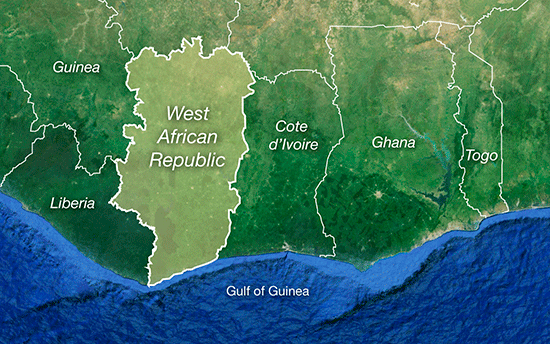
You are the senior executive in charge of managing the development and expansion of WANOCO International, the international affiliate of the West African National Oil Company. Your challenge is to build a profitable oil and gas enterprise with projects in Latin America and Africa.
At the outset of the business game, you manage a set of oil and gas industry assets that have mixed levels of performance. As new opportunities arise, you are asked to make recommendations that lead to an optimal portfolio. In doing so you are asked to measure the attractiveness of each such opportunity based on commercial, financial, political, social, regulatory, and other characteristics and then implement your decisions in the most effective way possible. In the process, you will respond to many different business challenges. Teams participate over a simulated 15-year timespan and report final performance results.