
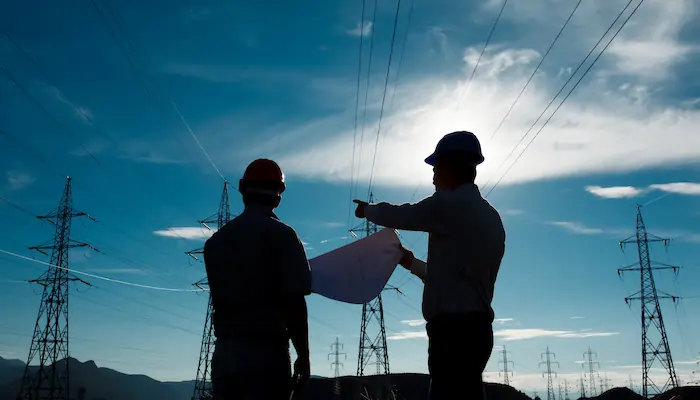
The power industry is facing a workforce crisis that hiring alone cannot solve. The U.S. power sector needs more than 750,000 new workers by 2030, according to POWER Magazine. Transmission and distribution alone require apprenticeship pipelines to grow from 45,000 to 65,000 per year. Globally, the energy industry needs 40% more qualified entrants annually than it is currently producing, requiring an estimated $2.6 billion per year in training investment.
These are not abstract numbers. They represent the people who keep the lights on, maintain grid reliability, and operate the generation assets that power our economy. As an energy training institute that has spent more than 55 years developing technical workforces, we see this gap widening every day.
The question is not whether the gap exists, but whether companies are building the systems to close it.
Hiring Alone Won’t Fix This
According to a recent industry survey, over half of energy companies now report that hiring shortages are actively delaying projects and grid upgrades. But the deeper problem is not just finding people, it is making them competent fast enough to be safe, productive, and effective in high-stakes operating environments.
When experienced workers retire, they take decades of institutional knowledge with them. A new hire with the right credentials still needs structured development to perform at the level the grid demands. Energy training courses have long addressed this in the upstream sector. The power industry now needs the same level of rigor.
Traditional approaches, like classroom-only instruction or informal mentoring, cannot scale to meet this demand. Companies need a comprehensive system.
Competency Management: The System Behind Workforce Readiness
A competency management system does what job descriptions and training catalogs cannot. It defines exactly what each role requires, assesses where individuals stand against those requirements, identifies gaps, and delivers targeted learning to close them.
For power generation, transmission, and distribution organizations, this means:
- Safety and compliance readiness. Every team member meets regulatory standards across all generating assets, keeping operations audit-ready
- Faster onboarding. Structured pathways accelerate time-to-competency for new hires, from field operators to control room staff
- Retention and career development. Clear progression pathways from technician to plant manager help retain experienced professionals
- Operational consistency. Every team member performs to a defined standard, whether operating a control panel, maintaining switchgear, or leading a shift
Research from Gitnux shows that 70% of energy companies have increased their upskilling investments over the past two years. But investment without structure is just spending. A competency management system turns training dollars into measurable workforce capability.
Proven at Scale with a Global Power Leader
At IHRDC, we did not wait for the power workforce crisis to arrive. Four years ago, we partnered with ENGIE, one of the world’s largest independent power producers, to build and deploy a comprehensive competency framework covering power generation, desalination, maintenance, and leadership roles.
These are not theoretical models. They have been developed, tested, and refined across real operations in the Middle East, Africa, and beyond. The framework covers more than twenty-five specific job roles, including:
- Operations — shift team leaders, control room operators (power and desalination), field operators, and chemists
- Maintenance — mechanical, electrical, and instrumentation engineers and technicians at every level
- Leadership — plant managers, supervisors, professionals, and paraprofessionals
These battle-tested competency models are now available for licensing, giving power and utility companies a ready-made, expert-validated foundation for their own competency programs. Instead of building from scratch, organizations can deploy proven frameworks and start closing gaps immediately. Visit our Power library here.
From Oil and Gas to Clean Energy: Training That Evolves
IHRDC built its reputation for over five decades delivering oil and gas training courses with professional certifications, and competency content for the upstream sector. That foundation, including more than 1,500 technical e-Learning courses and 6,500 micro-learning modules, now extends into the power industry and clean energy disciplines.
Our growing library includes competency frameworks and learning content for hydrogen, wind, carbon capture, and sustainability. As generation portfolios diversify, the training infrastructure needs to keep pace. Whether your workforce is operating a conventional gas turbine, integrating renewables into the grid, or managing a desalination facility, the competency system adapts to your specific requirements.
Developing and retaining new skills requires more than individual learning onscreen. That is why IHRDC also delivers instructor-led training programs built specifically for the power industry. These programs use immersive business learning simulations that put commercial team members and technical leads into realistic scenarios, building decision-making skills and operational judgment that online modules alone cannot replicate. Participants can engage with experts in the field and collaborate with their cross-functional team members, fully activating the essentials of adult learning principles. It is a combination of structured competency frameworks, self-paced e-Learning, and hands-on instructor-led programs that produce a truly job-ready workforce.
The wide-scale delivery of comprehensive online oil, gas, power, and clean energy courses remain essential for standardized training of global workforces. 40% of energy workers now prefer online learning modules, and platforms like IHRDC Learning (CMS Online) deliver competency management and e-Learning through a single application, available on desktop and mobile. A modern learning management system makes it possible to train people where they are, on their schedule, without pulling them off the job for weeks at a time.
The Competitive Advantage Is Workforce Readiness
The power industry’s workforce gap is real, but it is solvable. The companies that invest in structured competency development now, with proven frameworks, targeted energy training courses, and systems that scale, will have the operational advantage. They will onboard new employees faster, retain talent longer, and operate across their organizations more safely.
The ones that rely on hiring alone will continue to face the challenges of unaddressed skill gaps.
IHRDC has spent more than 55 years helping energy companies build the skilled workforces they need. If you are ready to address the power industry’s talent development challenge with proven competency solutions, visit us at ihrdc.com or contact us at [email protected].